Thursday, April 9, 2015

"Let's Get Married" Review


Let's Get Married is a romantic comedy based on the popular 2013 Chinese TV show. Both movie and series examine the ups and downs of relationships, but unlike something like Sex and the City, the film centers on different characters than the show, choosing to follow it in spirit: glamorous and goofy.

The film navigates through four stories: Wenwen (Gao Yuanyuan) is the manager of a bridal boutique, dreaming of her own special day; Yi Wen (Bea Hayden Kao), a violinist, travels from Beijing to Italy for a competition, meeting Luca (Li Chen), a laid-back tour guide; Xiaoling (Zheng Kai) and Gu Xiaolei (Ivy Chen) are a pilot and stewardess debating whether it’s the right time to get married; Hotel manager Hai Xin (Liu Tao), feeling upstaged and ignored by her star chef husband Cao Depeng (Wang Zijian), begins to question her marriage after a nasty argument.

If four stories in two hours sounds like a jumble, it shouldn't; but somehow it is. The film's first half paces well, even if it tends to enjoy Wenwen and Yi Wen's stories more than the other two. However, by this time, I feel the stories are getting ready to wrap up. Imagine my shock when I check my phone and see I have an hour left.

This latter half slugs along, padding out stories for dramatic "tension;" but here's the rub: these stories are no Shakespeare. There's little surprise to be had, and the film treats the viewer as if they've never seen a romantic comedy. In essence, I'm waiting for the film to cross off moments from my mental checklist: the misunderstanding separating a couple, the realization a character has been an idiot to their significant other, the wedding scene, etc.

But just because I've seen films like this before doesn't nullify Let's Get Married's existence. The movie's bubbly, silly; and as a chef blows into a duck or a pair of costumed pandas suddenly pop into frame, I find myself giggling at the lighthearted absurdity of it all. Director Jiang Liu, who also helmed the TV show, gives the film a similarly glossy glow. He shoots Beijing and Italy with scrutiny, showing off every gorgeous angle both cities have to offer. Some of the camera techniques make me turn my head a little (including some choppy slo-mo that makes me giggle) but the whole film carries a chic flair I can't help but admire.

All in all, Let's Get Married is a sprinter: lively and energetic in the beginning, but drags more and more the longer it runs. It's not offensive or soulless like the worst rom-coms I've seen, but then again, I've also seen better. If you're a fan of the genre, give it a rental. Thank you all for reading; I'm the Man Without a Plan, signing off.    


Thursday, April 2, 2015

"It Follows" Review


It's rare in recent years to find in mainstream horror a movie that doesn't succumb to what I like to call "jumpscare culture": the idea that fear starts and ends with loud noises and spooky little girls popping into frame. Paranormal Activity, Insidious, The Last Exorcism, and Ouija are only a handful of properties who've abused the formula to diminishing returns, a trend revealing how sick audiences are of the same tricks. To put it bluntly, we're in the midst of a lazy spell in horror, and need something to wake us up. Enter David Robert Mitchell's It Follows.

It's ironic that such an inventive, fresh horror film looks to the past as its foundation. It Follows oozes retro cool, evoking the late 70's/early 80's with its set pieces (typewriters, CRT televisions), fashion (in particular, a dress I imagine could be donned by Carrie), and equally tantalizing and menacing synthesizer soundtrack. Many reviewers have made the comparison to John Carpenter and I join the hive mind, citing Halloween as the prime example. While both films are set around the same time, they don't draw attention to it, evoking a timeless feel, like a campfire story.

Jay, at 19 years of age (Maika Monroe), is drawn to idealistic views of romance, sex, and adulthood. When she meets sexy, smoldering, mysterious Hugh (Jake Weary), she thinks these dreams are coming true; but after their first time, she wakes up tied to a wheelchair under a bridge, where Hugh imparts a disturbing revelation: he's been plagued by a murderous entity, transmitted sexually by his ex-lover, now imparted to Jay. The monster can take the form of any person (only able to be seen by any current or previous victim) and will not cease its pursuit until it kills; at that point, it goes to the last person, following the chain to the beginning. Hugh advises Jay to keep passing it on, but Jay hopes to find another way, with the help of her sister and friends. Regardless, the hunt is on, and no one is safe.

The Carpenter comparisons don't stop at production design; Mitchell relies on suspense, masterfully building tension and paranoia. Wide landscapes and frequent panning draws the eye to all corners of the screen, vetting every person to determine who could be the monster: a tendency Mitchell devilishly teases the audience with. With cinematographer Mike Gioulakis, Mitchell showcases Detroit in transition, juxtaposing a romantic suburbia full of playful kids and 50's-tinged movie theaters with urban decay, characterized by condemned buildings and industrial smoke. The city parallels Jay, both feeling the pressures exerted by the dangers they face, both losing their innocence, so to speak. It all makes for a grim, isolating environment that slowly constricts its grip on our nerves, beating us down just as it does Jay.

It's not new for horror movies to explore sexuality; look to the big three slasher franchises: Halloween, Friday the 13th, and A Nightmare on Elm Street. By now we know the cliches: promiscuous teenagers are destined to be interrupted by a knife to the throat, while the virgin heroine is often the only one left standing at the film's end. Where Mitchell's inventiveness comes from is his ability to transcend this extreme interpretation of the virgin-whore complex and explore gender discrepancies in using sexuality as a social identifier. 

From the beginning, Jay is identified sexually, whether it be from ogling pre-teens as she lays in a pool or through initial conversations with her sister, where the topic revolves around her sexual status with Hugh. After her first time, she's followed by the entity ceaselessly; the ramifications of losing her virginity are inescapable, seeping their way into Jay's perception of herself, her family, and men in general. When sexuality is at the forefront of a person's social identity, the objectification can cause psychological damage, especially if the person has been violated or raped. Jay's emotional and mental deterioration is put on display as the subject of every conversation is about her sexual past or how she can use sex to push the entity away. By doing so, Mitchell critiques the morality of the virgin-whore complex, revealing the negative repercussions such a social construct can impart on individuals, specifically women.  

Monroe (who starred in last year's The Guest, another 80's style thriller) plays the role with aplomb. She's vulnerable, naive, paranoid, tenacious, doing it all without strain. My compliments extend to the supporting cast (Lili Sepe, Daniel Sovatto, Olivia Luccardi, Kier Gilchrist), who avoid the stilted delivery and glazed looks young horror actors are often known for (an unfortunately timeless trope; this is just as bad in Friday the 13th as it is with Texas Chainsaw 3D). This is a strong ensemble cast, and the film sets aside time to let them play off each other, establish natural chemistry.

It Follows is not without its faults; the second half indulges in some of the worse cliches horror has to offer, which might leave audiences underwhelmed. However, Mitchell has dressed a modern exploration of sexuality and identity in simple, nail-biting terror, preying on our collective social fears. Meticulously crafted and expertly executed, this film is simply put, a must-see.


Sunday, March 22, 2015

"The Divergent Series: Insurgent" Review


At times I'm at odds with my scoring system; I like to lean towards how much I enjoy a film, because after all, this dog-and-pony-show relies on subjective views and I don't want to come off as a self-proclaimed alpha and omega of film criticism. My problem today comes from talking about a movie that I know is bad, is riddled with plot holes, questionable design choices, and bland characters...but I love dearly. The Divergent Series: Insurgent is my favorite movie of the year...for all the wrong reasons. 

For newcomers to the series, a post-apocalyptic Chicago sees the government dividing the population into factions based on personality traits: Erudite (intelligence), Dauntless (bravery), Candor (honesty), Amity (peace), Abnegation (selflessness). Those who don't fit into one faction are "divergent," shunned as pariahs. 

Insurgent sees Shailene Woodley return as divergent-turned-Dauntless Tris Prior, now a fugitive after stopping the Erudite faction, led by Jeanine (Kate Winslet), from using a mind-control serum to subvert the Dauntless faction into her personal army and overthrow Abnegation from power. The damage has been done, however; Jeanine has orchestrated her government takeover, and now hunts Tris and the rest of the rebels, including Tris's unfortunately-named-boyfriend Four (Theo James), her brother Caleb (Ansel Elgort), and smarmy Peter (Miles Teller). (Am I the only one who does a double-take seeing three of Woodley's on-screen boyfriends: James from Divergent, Elgort from The Fault In Our Stars, and Teller from The Spectacular Now, in the same movie?)

Tris, overwhelmed by the deaths of her parents and friend Will, whom she killed in self-defense in the last film, blames herself for everything, sinking into depression, considering herself "deadly" to everyone she cares for. Throughout the movie, Tris battles with her grief and guilt, growing self-deprecating and hostile. Woodley's performance is diverse and raw, exemplified best in a confessional courtroom scene. I called her an "ugly crier" in my Fault In Our Stars review, and the honesty is no less brutal here.

Insurgent's supporting cast isn't unlike other young adult adaptations: skillful, but underutilized, their few appearances as gloriously goofy as possible. Naomi Watts plays Four's mother, leader of the divergent, and despite living in the concrete foundation of a bombed building, her hair looks absolutely flawless. It fits well with the "mom reliving her 90's glory days" wardrobe. Kate Winslet's Jeanine, while icy, looks too confused for someone supposed to be the smartest in the room. But if there's anyone to bring me joy, it's Jai Courtney who, while playing henchman Eric, looks like he's auditioning for his Terminator Genisys role, with his robotic gait and Bateman-esque grin. In another movie, he'd be intimidating, but here? Not so much. 

The movie suffers from its inability to get its advocacy for self-love across and build a convincing sci-fi story around it. It seems like the script is made up as the film's rolling, stringing together a multitude of ideas with long stretches of dialogue, pointless action, and the almighty McGuffin. Despite the heavy padding, the movie moves at a surprisingly brisk pace, to the point where I didn't feel the strain, as "Divergent" irritatingly did.

With director Robert Schwentke (RED, The Time Traveler's Wife) at the helm, Insurgent carries a more defined personality, with a bit more irreverence than Neil Burger's gray-on-gray Divergent. However, this story needs focus and less cooks in the kitchen (2 for Divergent, 3 for this film), to where we can get an ideas for what pieces should be highlighted. Perhaps the series can take the Gone Girl route and let Veronica Roth adapt her own novel.

As is, Insurgent is an easy watch, best suited for friends who don't mind cracking a few jokes at a film's expense. There's a good cast and director here, but the story can get so convoluted, it just brings giggles to my face. It's silly and runs on autopilot, but it's managed to find a soft spot in my heart. If you're a fan of the series, you're already going to see it; if not, turn your brain off and bring a hefty bag of popcorn.

Thank you all for reading; I'm the Man Without A Plan, signing off.


Wednesday, March 18, 2015

"Run All Night" Review


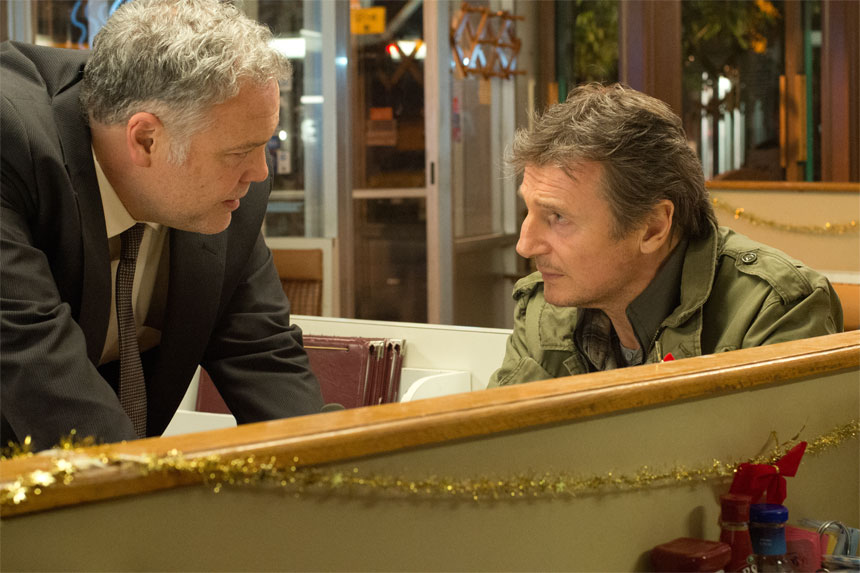
I'd be remiss to talk about "Run All Night" without making the comparison to "Taken 3", 2015's first Liam-Neeson-shoots-bad-guys-to-save-his-family film. "Taken 3", through incomprehensible action and ho-hum characters, neuters the house its predecessor built; but this is where "Run All Night" comes in.

"Run All Night" is the better offering from Neeson this year, but not solely from the benefit of lowered expectations. It sticks to the formula, and works within its confines. With inspired action and strong performances from the likes of Ed Harris, Joel Kinnaman, Vincent D'Onofrio and Neeson, "Run All Night" delivers a solidly entertaining 90's-tinted revenge thriller.   


Neeson plays mob stooge Jimmy Conlon, working for the Maguire family, led by childhood friend Shawn (Harris) and his son, Danny (Boyd Holbrook). When the aftermath of Danny's bad business deal ropes in Jimmy's estranged son, Michael (Kinnaman), Jimmy confronts Shawn, the police, and his own past to save Michael and his family.

Where "Run All Night" differs from others in the Neeson catalog is in its characterization. The movie is a crossroads between corruption and redemption, scumbags and honest businessmen. Throughout, a tension brews as Jimmy tries to redeem (or at least, come to grips with) his murderous past, Michael fights to avoid becoming like his father, and Shawn reluctantly slides back into his old, violent ways. The film takes the time to let these performances create empathy and involve us into not only the bulk of the story, but its emotional undercurrents.

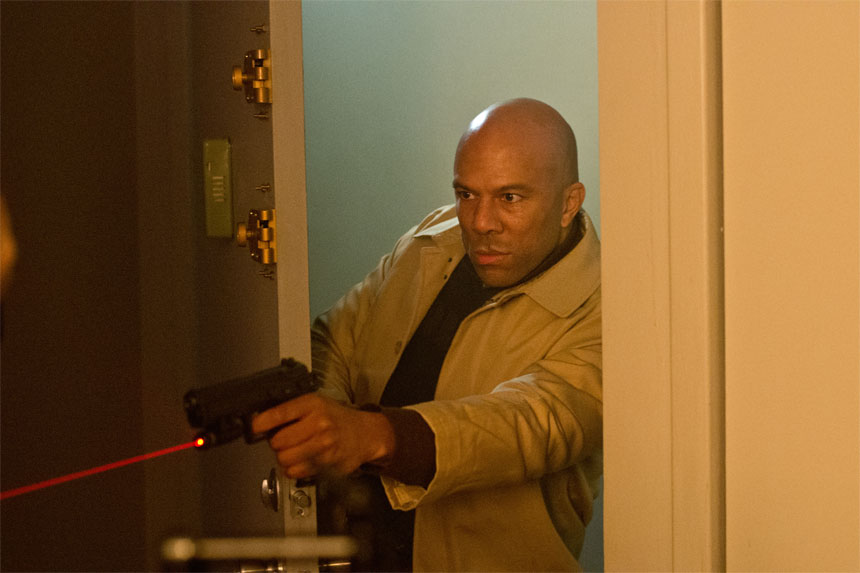
However, don't make this to be a dialogue drama; any movie involving Liam Neeson in a gunfight with Common (who oddly resembles both Clark Kent and the T-1000 as Shawn's hit man) laughs at such an accusation. Director Jaume Collet-Serra (Non-Stop, Orphan) crafts impressive action, most notably an early car chase that's in-your-face without blowing up every fire hydrant and fruit stand on the sides of the streets. Whether it be a fistfight or a chase, Collet-Serra plots each scene with purpose, raising the stakes and stacking the odds against the protagonists.

My main issue with "Run All Night" is its attempts to be stylish or artsy, with indulgent cinematography and CGI transitions. While they do give the film character, I find these elements to distract from the action, something Collet-Serra ironically mentions in a DP/30 interview. With such a dirty, realistic tone, these pieces don't fit.

Barring this nitpick, I'm pleasantly surprised at how much I enjoyed this film. Fun performances across the board, inspired dialogue and character development, well-constructed action: it all makes for a thriller that when stacked up against others in the Neeson genre, stands as a solid contender for one of the best. If you're looking for a hard-boiled action flick with a classic feel, this is a good choice for an afternoon matinee.

Thank you all for reading; I'm the Man Without A Plan, signing off. 


Tuesday, March 3, 2015

"What We Do In The Shadows" Review


What We Do In The Shadows is a mockumentary exposing the lives of three vampires: the foppish Viago (Taika Waititi), short-tempered Deacon (Jonathan Brugh), and macho Vladisav (Jermaine Clement), flatmates in New Zealand. The trio struggles with keeping their identities a secret, delegating house chores, and hardest of all, figuring out the intricacies of modern life.
 
With the Scary Movie and A Haunted House series at an all-time low, What We Do In The Shadows is a breath of fresh air for horror spoofs, putting original, quirky, and witty twists on monster movies. Clement and Waititi balance making fun of the common (vampires' weakness to sunlight), and obscure (vampires' inability to enter one's residence uninvited) clichés well, in a move that satisfies horror novices and experts alike. The film throws nods to a variety of vampires: Viago borrows Dracula's sophisticated flair; Vladisav resembles his medieval, alluring namesake, Vlad the Impaler; the movie even namedrops Blade and The Lost Boys. Vampires aren't the only subjects of jokes; the film throws in zombies, witches, and werewolves. The werewolves, in particular, are hilarious, working to stay peaceful by any means necessary, whether it be chaining themselves to trees, or simply stop cussing.
 
 
The production matches its genre's aesthetics superbly. The Gothic house and Victorian-influenced wardrobes help make What We Do In The Shadows fit as a throwback to 70's horror, like Hammer Films' Taste The Blood of Dracula. Adding creature transformations, high-flying (gliding, really) vampire special effects, and of course, buckets of blood, gives the film a classic horror film with an modern indie edge.
 
It'd be easy to make a film with all gags, but the movie fleshes out each character, dedicating time for them to interact with each other. Waititi, Burgh, and Clement have great chemistry; their banter is quick, relaxed, and hilarious. Notable supporting roles include Stuart Rutherford as the vampires' only human friend, guiding them into the land of Google and Skype, and Ben Fransham as the Nosferatu-like Petyr.
 
What We Do In The Shadows breathes life (forgive the pun) into an otherwise stagnant movie genre. It spoofs the monster movie and found footage genre with a variety of references, in-jokes, slapstick, and wit, balanced in such a way to keep mainstream audience and horror buffs happy. My fellow theater patrons burst out laughing all throughout and I'm sure you will, as well. In a comedy climate full of The D.U.F.F. and Hot Tub Time Machine 2, you owe yourself a smarter, funnier movie, and this is it.
 
Thank you all for reading; I'm the Man Without A Plan, signing off.


Sunday, February 22, 2015

The Oscar "Best Picture" Showcase!

The day of the 87th Academy Awards is upon us, and as promised, I've viewed every single nominee for "Best Picture". Now is time to rank them, so from least to most favorite, and additionally what I think their chances for winning are, here's the list.
8. The Theory of Everything. Out of all the nominees, this is the one I didn't enjoy; and while my initial reaction was heightened due to a raging headache, with some thought, I've arrived at a firm, conclusive "meh." When people use the term "Oscar bait," I can only imagine this film comes to mind. Let's go down the 'hot-button' checklist, shall we?
- Period Piece.
- Protagonist w/disability.
- Biopic.
- Set in Britain.
- Atheism.
Check, and check. Now, all these elements feature in great movies, but what The Theory of Everything does is use the aforementioned to mask its weak story. For too long, the movie wastes time with the nanny characters, inciting a back-and-forth love triangle that stops the movie dead in its tracks. For a movie exploring the life of Stephen Hawking, one of the most revolutionary scientists to emerge in the past fifty years, I'm stunned the movie needs to waste time on ideas better suited for a Nicholas Sparks book. The film meanders along aimlessly until major scenes come around, whether it be Stephen and Jane's first use of a letter/color board, or at dinner with old friends. Instead, we get marital woes, montages, lame comedy, and too many scenes devoted to people sitting down and talking.
Despite the problems, what I think grabs the Academy's attention are the leads: Eddie Redmayne and Felicity Jones, as Stephen and Jane Hawking. Both are immersed in their characters' lives: mannerisms, personalities and all. Redmayne's physical prowess is extraordinary, and with only a few seconds of thought, I find the juggling act of lines, dialect, emotion, physical struggles, and the endurance to keep those struggles prominent, impossible to conceptualize, let alone actualize. Add in his charm and vulnerability, and Redmayne becomes a serious Best Actor contender. However, let us not forget Jones, whose quiet, but fiercely loyal and strong Jane shares as much of the running time as Redmayne. Though he can disappear into the fame and accolades when trouble arises, she faces it head-on, showing the life of a woman whose thoughts are occupied by others more than should ever be demanded. Facing conflict is one thing, but Jane's kind heart and playfulness shines through in Jones' performance, making her a thrill to watch.
The Theory of Everything is a mixed bag, and despite the Oscar bait, I don't think (barring a major upset) that voters will be ready to pick it. If given a weaker year, the traditional elements might stand a chance, but this year's gallery of nominees are too strong for this film to stand a chance.
   
7. American Sniper. If looking for an editorial based on a historical approach, I suggest you type in "'American Sniper' thoughts" on Google, grab a snack, and enjoy the ride. I empathize with all commenters from all over the political spectrum. 
  
Take away the hype and punditry, and American Sniper is alright. It's an adequate portrayal of a man driven to fight and defend "God, country, and family." If Clint Eastwood is the driving force behind the film, it's his blunt direction that leaves the mark.
Eastwood is straightforward, which leaves the film with strong and weak aspects. In the middle of battle, action is dynamic without being suffocating, thrilling and suspenseful. The movie offers little commentary; along with screenwriter Jason Hall, Eastwood presents Chris Kyle's spirit from the novel accurately.
Where the simplicity fails is in the editing. The film's script is full of ideas: Kyle's biography, the details of his mission in Iraq, relationship with his family and friends, and PTSD. Eastwood, presenting the story as is, leaves the film cluttered, jam-packing two hours with moderate focus on all aspects. As a result, the emotional impact of Kyle's PTSD never hits as strong as it should (the bar scene from the trailer is disappointingly short), and the supporting cast, especially Kyle's wife (Sienna Miller), devolves into cliché territory as she bemoans about how even when he's home, he's never really "home." Instead of spending so much time on every aspect of the mission, including the rival sniper, a greater focus on how Kyle's work affects his family, would better serve a look into what difficulties a soldier faces.
Among the politics and think pieces, there's one aspect that seems clear across the board: this is one of, if not, Bradley Cooper's best performances. Ignore the weight gain and accent for a second. Cooper IS Kyle: his determination to protect, his candid loyalty to his idealized America, confusion towards anyone who would dare speak negatively of the SEALs. He completely gets lost in the role, and sells it so convincingly, one can't help but be fascinated by Kyle as a character. It's my favorite Cooper role, just behind Rocket Raccoon (if you would've told me I would type this sentence two years ago, I'd laugh in your face.)
What are American Sniper's chances for the trophy? Unless the voters' politics sway the decision substantially, my thoughts are the same as with Theory: there are too many more critically-praised and award-winning nominees in the mix. 
6. The Imitation Game. I'd offer this film as the flipside to Theory of Everything: the more dramatic, heartfelt, and thrilling of the British biographical period pieces about brilliant intellectuals featuring their relationship with equally brilliant women. While Theory of Everything uses its Oscar bait to hide its aimlessness, The Imitation Game is a taut, intelligent drama about a man working to define his identity and find acceptance, set in the backdrop of World War II.
Benedict Cumberbatch is Alan Turing, the scientist whose "logic machines" served as the prototype for computers, charged with the task of uncovering the Enigma code, used by the Nazis to deliver encrypted messages. Cumberbatch shows off a softer side than his roles as Sherlock and Khan, but is no less convincing playing the smartest guy in the room. The strongest scenes feature Turing in crisis, whether it be his frustrations with solving the code or accepting his difficulties. Cumberbatch is equal parts inspiring and heartbreaking, in a performance that grows stronger in my mind everyday.
Director Morten Tyldum manages to keep all ideas afloat: the Enigma code, Turing's ostracism, his homosexuality and the troubles it brings. However, the movie never loses sight of the big picture. As it cuts from Turing's Bletchley Park headquarters to the firebombings of London, Tyldum reminds us of the stakes, of all the lives endangered every day the code isn't solved. He keeps the story thrilling, as we view it through the eyes of an equally confused, terrified, brilliant man. The Imitation Game is a drama that has it all.
If the "Oscar Bait" plays a role in voters' minds this year, I'd understand if they choose the film. It's not winning the bulk of Directors' or Producers' Guild Awards, though, which makes me wary of its shots.
5. Whiplash. I have no faith in this to win Best Picture, not a shred. But as evidenced by my "Top Ten Favorites of 2014," I adore this film. This is the kind of movie that shakes up genre, style, and dialogue. It gives people like me, bored with Hollywood's craze of "re-imagining" everything, hope for unabashedly original stories. Oh, did I mention this is a debut?
Damien Chazelle deserves more praise than he's getting, but I understand. His indie drama stands up to the likes of Linklater, Iñárritu, and Eastwood; of course Chazelle is an underdog, but don't think for a second he hasn't earned a comparsion. Whiplash is meticulous, in style, performance, and editing. The story moves at just the right pace, keeping tension while allowing time to breathe and take in the atmosphere and transformation of Andrew's world in this jazz conservatory. The cool colors, syncopated edits, explosive soundtrack: this world is alive, vibrant, yet dangerous.
 J.K. Simmons has won a shelf full of "Best Supporting Actor" awards, as his bone-chilling performance deserves, but let's not forget Miles Teller, who's gone from playing a wisecracking jackass in "21 And Over" to an obsessed, self-destructive young man driven to madness by glory. His transformation, guided by Chazelle, is slow, but daunting. Teller enters naïve, emerges confident. If ever a breakout role were to succeed, this would be it.
  
4. Selma. David Oyelowo and Ava DuVernay deserved nominations. Oyelowo is transformative, owning the role of Dr. King: a subtle, yet triumphant performance. Not only did he deserve the Best Actor nomination, but stack him up against any of the nominees, and you'll find he deserves the award.
But if there's a not-so-silent heroine of this story, it's DuVernay. She corrals every element, from the performances to the script, the cinematography to the editing, to fit her specific, yet ambitious vision. DuVernay presents King as figurehead, and figurehead only. Of course we admire the reverend's work and his tenacity, but she makes sure to reign in the hero worship and show the issue as it should be: a look at institutionalized racism and the difficulties presented when trying to change laws validated by the highest officials of government.
She lines up the players from opposing sides, allowing them to speak their piece, and if this starts to resemble a chessboard, it should. We become enraptured in the maneuvers necessary to inspire political change, discerning what issues are most effective to attack, where to protest, how to protest, what demographics to appeal to, and which local opponent will provide the easiest victory.
However, Selma never gets lost in intellectualization. Its best moments are intimate: a pre-Nobel Peace Prize conversation between Martin and Coretta, an interaction with a grandfather mourning his grandson. Selma reveals not only how people affect politics, but how politics affect people.
So here's the rub: will it win? I don't think so. I can be cynical (or realistic, depending on who you ask,) and say the Academy used its Black sympathy vote on "12 Years a Slave" last year. However, this is a tough year full of ambitious projects, and I think ambition will play a massive role in how the voters will sway. When looking at the effort spent to make some of these pictures, Selma's process is a little too traditional to grab people's attention. But to offer hope for fans, Selma is the type of film whose life won't begin and end with the Academy Awards. I predict many required high school viewings ahead.  
3. The Grand Budapest Hotel. Cue the balalaikas! From beginning to end, I was grinning like an idiot. If we gave the Oscar to a film experience, the most fun had while watching, I'd give it to this in a heartbeat.
When thinking of the Oscars, one thinks of highbrow dramas and depressing examinations of the intricacies of life. You think of thematic tales, hot-button issues. So here's my question: how does an eccentric, candy colored, pop-up book of a murder mystery, draped in comedy, grab 9 Oscar nominations? 9?! It's simple when you think about it: The Grand Budapest Hotel is a good, fun movie. 
Wrapped in four layers of framing (director Wes Anderson probably looks at Inception and giggles), Mr. Zero Moustafa (F. Murray Abraham) guides us through his adventures as a youth, the new lobby boy at the GRAND Budapest Hotel. Why "grand" in all caps? Well, that's how Monsieur Gustave (Ralph Fiennes) sees it. He's the beloved owner of the hotel keeping everything perfect for his guests (especially the elderly women), down to the smallest detail. Whenever one of his most admired guests dies, he, along with Zero, travels to her funeral, where all hell breaks loose, including drama about a will, the ownership of a famous painting, and the particulars of Madame's death...
I compare this film to a pop-up book made for adults. The movie's vibrant, obsessed with composing shots symmetrically, as if drawn that way. We see miniatures, multiple distinct sets and production designs: all a joy to behold.
Ralph Fiennes is snubbed an Oscar nomination as the captivating, proper, and eccentric Gustave, flowing between witty dialogue and Chaplin-esque physical comedy with ease; and Tony Revolori delivers a breakout performance as the loyal, weirded-out, only-jealous-when-his-girlfriend-is-brought-up Zero. This doesn't even begin to cover all the cameos and secondary performances from the likes of Willem Dafoe, Harvey Keitel, and Saoirse Ronan, but let me tell you: they are all phenomenal, cast perfectly, hitting all the right marks.
So with seemingly ALL the nominations (tied with this list's number 2), what are The Grand Budapest Hotel's chances for the trophy? I think it's possible. So much attention has been placed on other nominees, and I think this movie could end up being a dark horse victory. Wes Anderson delivers an ambitious, unforgettable, hilarious comedy, bolstered by a fantastic ensemble cast. Too much ado about a silly film? Probably. But does it have the chops? Definitely.
2. Birdman or (The Unexpected Virtue Of Ignorance). Of the nominees, Birdman has occupied most of my thoughts. It's been a slow burn; I saw it as the second part of a double-feature with Whiplash (a great day, I might add), and I enjoyed Whiplash a little more. But then the movie started working its way into my mind. I began to analyze the performances, and the cinematography, and the story, and its themes, and the direction, and then comes December where it skyrockets from my number six to my second favorite movie of the year. Honestly, an hour before the ceremony, who do I think will win the Oscar? This film. So what's prompted this slow takeover of my mind?

It comes in two parts. The first, obviously, is the film's technical mastery. The idea of a movie that looks like one long take, resembling a theatrical performance is one thing. But all one needs to do is think of how complex the staging is. Characters move in and out of frame, sometimes for a second. There are scenes that go from room to room, down stairs, through monologues and dialogue. The lighting has to be right; the camera angles need to be precise, yet have a fluid look. Any actor involved, from Keaton to Galifanakis will tell you of the constant "alertness," the need to be focused and deliver their best 100% of the time, so as not to be the one wrong move that sends the Jenga tower falling to the floor and embarrass themselves.

As I watch Birdman, I look for edits. I sat down for my second and third viewings with the intent of catching all the little tricks. Luckily, with a DVD, one can pause and go frame by frame, but transitions like the one from Mike and Sam's first rooftop conversation to a shot from the middle of the street stuns me; I still have no idea how this angle can be achieved without a slight cut. It envelops a viewer like me in the filmmaking process, immersing us in this kinetic world.
Now, I start Birdman looking for the edits, but often I just get lost watching the story. This is a black comedy, taking shots at the "selfie" generation, egomaniacs of the theater world, the "assembly line" mentality of superhero franchises, and what they mean for actors searching for real art. When looking thematically, however, ego emerges among the rest. The film centers around pathetic people looking to be validated, whether it be through financial, critical, and social success, love, or just to shut the voice in one's head telling them they're worthless.

Director Alejandro Gonzalez Iñárritu focused on the internal voice as part of his life, the antagonist in one's mind, that, while able to push one past their comfort zone and work hard, can destroy their esteem, making them feel completely insignificant. (I can relate to that thought: my Birdman will often emerge when typing away. Editing these reviews often starts and stops with realizing what I've typed is trash, erasing everything and going at it again.)

As the movie nears the end, I can't help but feel bittersweet. Certainly, there are elements of accomplishment, but it doesn't feel right. In a way, I feel life is similar. We'll never truly feel satisfied, despite whatever level of success we achieve. Is there a remedy, a place we can accept? I'm not sure, but films like Birdman start the conversation on a high note. This is the kind of film that will not only be remembered, but celebrated.
1. Boyhood. Just like in December, I've had (and if we're to be honest, still have) a mental fistfight between this and Birdman, but as far as the Oscars go, and subsequent viewings will allow, Boyhood stands in my mind as the accomplishment of 2014.

Let's look at 2014. When we regard a movie as "Best Picture" of any year, an element that emerges is a movie's relation to that time, whether it be social, technical, what have you. With this criteria in mind, Boyhood shows us an America in the middle of reevaluating its ideals and values. We're looking at what constitutes "family" differently. We're looking at success differently, possibly diverting from a "money-first" view. In a sense, Americans, especially younger generations, are learning what to make of their lives.

Director Richard Linklater seems to assert that we don't see life as a blueprint, a series of goals (graduation, career, marriage, children) to achieve. Instead, we cherry pick a blend of intimate, powerful moments that when analyzed, we find the effects of upon our personalities.

We often don't know how or where life will take us, and approach the idea of "growing up" as taking place from 1st to 12th Grade, but Boyhood reminds us that we are fluid, we are constantly changing, all with the hope that where we'll end up will be better than where we are. As America reflects upon its problems, whether they be racial, financial, global, gender or sexuality-influenced, the film suggests we not be so quick to stick to tradition or pre-determined plans, for we don't seize the moment, "the moment seizes us."

Will Boyhood win? Initially, it's been the frontrunner, but as awards season progresses, Birdman seems to be taking the mantle. However, for my money, Boyhood is a film unlike any other: a 12 year masterpiece, that seems poised to be a hallmark of not only Linklater's career, but American cinema as a whole. 

--------------------------------------------------------------------------------------------------------------------------

Well, that's it! All that's left is for us to turn on the TV and keep our ears to the screen. The 2014 American movie year is almost over, and it's been a fun ride. Who's gonna win? Who will be snubbed? Will Neil Patrick Harris be better than Ellen? It's finally time! The 87th Academy Awards are underway! Thank you all for reading; I'm the Man Without a Plan, signing off! 

Tuesday, February 3, 2015

"Project Almanac" Review


The month of January, to movie fans, is cursed. This month is the hangover to the holiday season, where studios squeeze out projects they have little faith in, usually low-budget pictures that need little effort to make a profit. With eyes focused on the Oscar nominees, these movies pay the rent and keep the studio's lights on. Some films can escape the black fog ("Paddington" comes to mind), but more often than not, they all succumb to boredom, laziness, and product placement. And here's...another one!

"Project Almanac" follows David (Jonny Weston), an engineering whiz, who along with his sister, Christina (Virginia Gardner), and friends Jessie (Sofia Black-D'Elia), Quinn (Sam Lerner) and Alex (Allen Evangelista), discover blueprints for a time machine David's father worked on before his mysterious death. The teenagers manage to construct the machine and time travel shenanigans ensue.

This film joins the already-abundant assembly of time travel movies with one calling card: it's integrated with the found-footage genre. Christina often serves as the movie's videographer; she's instructed by David to "film everything" to keep track of the building process and time travel excursions, in case they need to refer back to any missteps. Outside of technical inconsistencies (least of which being, the studio-quality sound and picture originating from a 2004 camera), "found-footage" revolves around the concept that a third party has "found" and compiled the video together, usually in an attempt to explain any particular phenomenon. In this film, there is no third party. "The Blair Witch Project" gave us a title card explaining the police investigation. In "Cloverfield," the video was seized by the government. However, "Project Almanac" restricts the point-of-view to the teenagers, which is fine for the story, but doesn't serve the found-footage concept. This decision ends up looking like a quick justification for slashing the budget, a dangerous trend for Hollywood these days...


No movie has ever had a consensus from the scientific community about the accuracy of time travel, and until (if even possible) we achieve it, trying to accommodate a dexterous knowledge of the subject in film will always have inconsistencies. I've accepted this, and am willing to forgive a movie for errors if it sticks to entertaining me with all the possibilities time travel can offer. However, "Project Almanac" is padded, its second half littered with dancing montages and romantic subplots. The teens use time travel for personal gain (winning the lottery, dealing with bullies, etc.), which is fun, initially, but after forty minutes of watching other people party and play with GoPro cameras, my eyes tend to glaze and reach deeper inside my bucket of popcorn. As soon as these scenes end, the movie rushes through the third act, as if it realizes how much time it spent meandering and attempts to wrap everything loosely to not be late.

"Project Almanac" isn't awful: the cast shows good chemistry and there are decent performances from Weston and Black-D'Elia. It just doesn't stand out from others of its genre, and when the film references "Looper" or "Bill and Ted's Excellent Adventure", it makes me want to see those movies instead. Add in the shameless product placement and I chalk this one up as yet-another victim of the January curse. Skip it and take another trip in the DeLorean instead. Thank you all for reading; I'm the Man Without A Plan, signing off.