Thursday, December 17, 2015

"Macbeth" Review

Any adaptation of a play, consciously or not, will adopt a theatrical aesthetic. The performers exaggerate, the action constricts to a few locations. Theatre is also flexible. With runs that can last for months, every day is different and subject to a varying degree of improvisation and fluidity. So if film adaptations are subject to that kind of looseness, why shouldn't an audience member's experience be?
Enter me, into the screening of Justin Kurzel's Macbeth. It's a late Friday morning, and I, as per usual, haven't eaten breakfast. I, also as per usual, am running on three hours of sleep. Great idea, I then presume, to take in 2+ hours of Shakespearean dialogue, drizzled with an accent famous for its ease of understanding: a Scottish brogue.
I didn't catch a word.

Ay, here's a rub of theatre rearing its ugly head - how do you reach the guy in the back; the schmuck who wouldn't have seen your tale if not for his desire to come in out of the cold; the guy who's deaf in one ear and lost the other in Korea; the stupid, tired, hungry 22-year-old running on 75% brain power? The solution, my friends, is direction. The director treats each element of a work, the visuals, actors, music, screenwriting, and editing, like puzzle pieces. If they're good, each piece fits with the others so well, that even when a piece is missing, anyone will be able to make out what the picture is.
Macbeth is adeptly directed by Kurzel (The Snowtown Murders and next year's Assassin's Creed), blending epic landscapes with intimate soliloquies, eye-catching cinematography with nuanced performance. It's a beautiful movie about people who do ugly, sinful things, and Kurzel takes his time with the transformation, revealing how a simple spark can corrupt a good man.

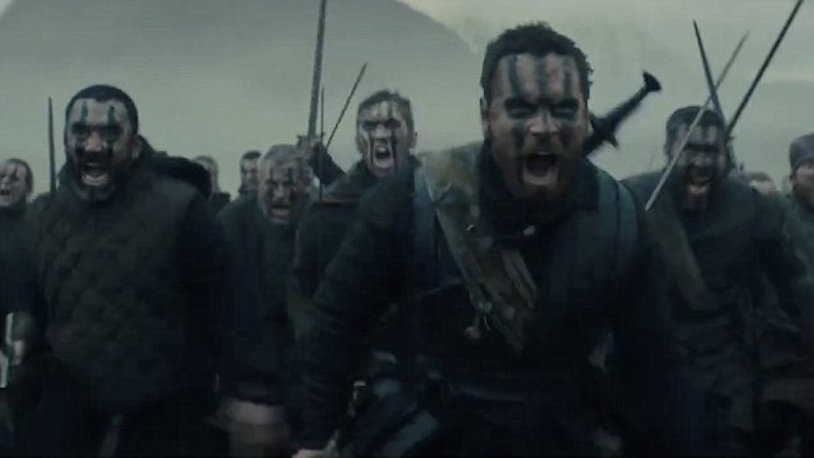
(I can't believe I'm about to give a synopsis for a nearly 400-year-old story, but here we go.) Macbeth (Michael Fassbender) is the thane (think a governor who reports to a king) of Glamis, a province in Scotland. He serves as general of King Duncan's (David Thewlis) army, and after a successful battle, is visited by the Three Witches, who prophesy he will become the King of Scotland. As soon as Lady Macbeth (Marion Cotillard), his wife, become privy to this information, she becomes lustful of the potential for high status and power, planting the seed in Macbeth's mind to kill King Duncan and usurp the throne. Macbeth succeeds, and after gaining the throne, devolves into madness, paranoia, and overwhelming guilt, ready to kill anyone who crosses his path.


Much of my enjoyment and understanding comes from the actors, primarily the two leads. Fassbender and Cotillard each showcase a large range, while honestly, playing their roles down. Fassbender is an actor with such particular performances; he sells madness, not lunacy. He goes just the right amount in whatever emotional direction he's given that I feel this man as the character, not the actor approaching the role. He's intimidating, ferocious, unhinged, tragic, and frail. On the opposite spectrum, Cotillard's Lady Macbeth is subdued, the serpent whispering in Macbeth's ear, the one who reins him back in from his more manic episodes. However, for a woman who could be played just as a heartless monster, Cotillard portrays her with grace and surprising humanity.

This couple could, so easily, be over-the-top Bond villains. I admit my bias; this is the first time I'm introduced to these characters, so I include no other interpretations or general consensus on how these roles are usually played, but Kurzel locks these actors in their own heads for a fair portion of the film, as they question their ambitions and actions. As a result, we, the audience, have an easier time empathizing. It makes the evil they commit more terrifying, because if they're regular people, like us, how easy could it be for any one of us to be corrupted as violently or quickly as they?

Kurzel gives the film the spectacle where it needs it - the environments. From lush valleys to blood-soaked battlefields and cathedrals as treacherous as they are holy, he, along with cinematographer Adam Arkapaw, give this Scotland the Shakespearean scope it needs. The production is overwhelming, as it should be. The stakes are always high, and full of tension; life and death lies in the balance at all times, from the film's visceral reds and oranges to its melancholy greys and blues. For my money, this is the year's best cinematography, laden with images that blow me away with their beauty, in the midst of ugliness.

For some, Macbeth may be better on rental. I'm a huge fan of dialogue, the way it looks, sounds, and reads. While the Scottish brogue gives the story a lyrical, musical quality, a conversational nature further separating its performers from theatre's exaggerated traditions, some may find they like it better when they can catch all the details reading the subtitles. I understand and appreciate that decision entirely, but there really is nothing like seeing this in the cinema, with the massive screen and floor-to-ceiling sound. The monologues can drag a bit, but when the film turns it up to 10, you see it, you hear it, you feel it in your bones. The puzzle's always visible; give this film a shot.

Thank you all for reading; I'm the Man Without a Plan, signing off.


Author's note: After two years, a lot of movies, and a lot of hours spent staring at my computer screen waiting for inspiration like lightning, my next post will be the Man Without a Plan's 100th. It's insane to think that I've done so many of these reviews, and am continuing to do so, but for a guy perpetually clueless as to what I should be doing, I figure I should give some insight as to what's next. I'm pretty damn sure this won't be a surprise, but I might as well just spit it out. Next time, on The Man Without a Plan, Star Wars: The Force Awakens. Biggest highlight of my blog should equal the biggest movie of the year, right?


Wednesday, December 9, 2015

"Krampus" Review

When I think of Krampus, I think of my preteen years, when I fell in love with any story with a wicked sense of humor, like The Evil Dead. I fell for movies that balanced creepiness and goofiness without dumbing it down, like Gremlins. This was also around the time when I first discovered A Christmas Story, whose characters felt like real people, with insecurities, flaws, and selfish desires. A Christmas Story isn't heartless, though; the warmth, the spirit of Christmas shines through, in the atmosphere, the characters' hopes. I don't fall for cynicism, but I don't fall for saccharine material, either. Both ends of that spectrum betray a sense of falsehood, and that, I think, is death to film. A movie can be rooted in imagination, don't get me wrong, but whenever it feels like a filmmaker approaches a story with a lack of honest passion, it stops feeling like a movie and more like an exercise. Krampus brings me back to that mischievous, heart-warming, boundlessly creative state of mind I fell in love with ten years ago.

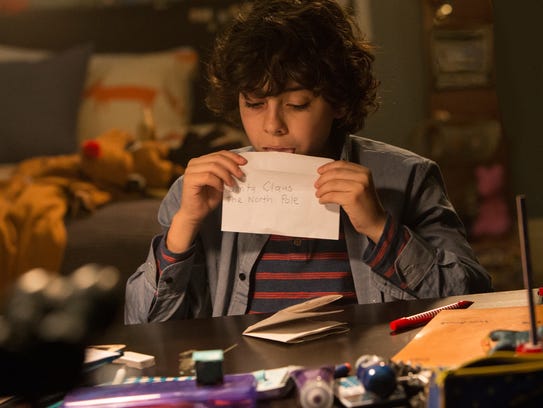
The film centers on Max (Emjay Anthony), a boy who's having a crisis of faith about Santa Claus. Initially, Max seems too old to be still on the fence, but I think the movie suggests the crisis is a struggle to keep his Christmas spirit alive, in spite of the rampant materialism and stress surrounding him. His family, including his father (Adam Scott), mother (Toni Collette), and sister (Stefanie LaVie Owen), approach the holidays with dread, completely resigned on the so-called new meaning of Christmas; the only one who's trying to keep festive is Max's German-speaking grandmother, Omi (Krista Stadler).

Max's uncle (David Koechner), aunt (Allison Tolman), cousins, and grand-aunt (Conchata Ferrell) arrive for the holidays - a good ol' fashioned group of gun-totin', Hummer-driving rednecks. The dysfunction grows as the two families clash, and when the cousins read Max's letter to Santa mockingly at the dinner table, it's the last straw. Max rips up his letter and tosses it out the window, unaware of the demonic presence he's summoned. A nightmarish blizzard swoops in, and with it, the horned monster Krampus.

I saw Love the Coopers a couple weeks ago, so when this film started with similar familiar dysfunction, I coiled up in worry. However, two things make Krampus work. For one, the tone is defined. From the jump, the families are cruel to each other, and tension builds until each member reaches their breaking point. Love the Coopers couldn't decide whether it wanted to softball dysfunction or let the characters express true disdain; Krampus doesn't pull any punches, and writers Todd Casey, Zach Shields, and Michael Dougherty (the film's director) pen jokes that make you feel guilty to laugh. The second thing is that the hatred doesn't last for long; demonic forces have a way of bringing people together. I never wanted a character to die; the film gives each member a redeeming, humanizing moment. (On a brief side note, it's great to see Adam Scott, usually an every-man in Parks and Recreation, adopt a more decisive hero mantle here. It suits him well.)


As Omi explains, because every German-speaking grandmother in a horror movie has encyclopedic knowledge of the supernatural, Krampus is known as the "shadow of St. Nicholas". Needless to say, if Santa Claus has reindeer, elves, and a magic bag of toys, Krampus' army looks as if it were designed by Tim Burton on LSD-laced eggnog. I mean this with the most endearing of sentiments: the costumes, puppetry, and visual effects are spot-on, right at home with creature features like Critters, Killer Klowns From Outer Space, and The Blob (1988). This movie's been praised for its heavy use of practical effects, which is, in itself, a welcome novelty. However, just because you wave a puppet in front of me doesn't mean I'll believe it's real. This is where Krampus differs. There's so much attention to detail, as far as movement and texture are concerned, that each creature feels alive. It's ironic that Dougherty and crew put so much effort into making the monster seem totally independent from its creators.

When Krampus arrives, the movie cranks up the pace, and at times, it rushes by too quickly for its own good. Characters handle themselves a bit too well; they never find themselves shaking their head in disbelief that, you know, evil gingerbread men exist. I'm not asking for a Christopher Nolan-style roundtable about the symbolic intricacies of candy canes, but just a scene or two where the characters get to lose their breath and freak out for a bit would present the characters as more believable. I fully admit it's a nitpick; between having a character get down to business versus watching them whimper in the corner for an hour...?

As the film progresses, it comes more and more unhinged, absolutely elated to exist in its mad, mad world. Krampus is a horror-comedy with ambition, passion, and heart, more so than the "traditional" Christmas movies I see. I had a blast, and I know I've found another welcome addition to my list of Christmas classics.

Thank you all for reading; I'm the Man Without a Plan, signing off.


Sunday, December 6, 2015

"Victor Frankenstein" Review

In my last piece, Some Thoughts On Annoying Moviegoers, I told the story of watching Victor Frankenstein for review, detailing the disrespect I received from some dolled-up hellions. After I posted it, a friend of mine asked if I'd then seen enough of the film to sufficiently review it. His assumption must have been that I walked out, and to be fair, could you have blamed me? But no, I hung around. Part of the reason why is I've never walked out of a film for anything less than an emergency - a critic's badge of tenacity. But the part I choose to highlight is that a good film more than makes up for the company. Victor Frankenstein is a good film.

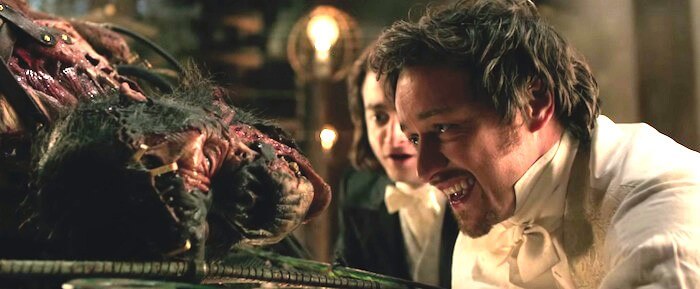
Screenwriter Max Landis (Chronicle, American Ultra) takes the story's familiar elements - mad scientists, hunchbacks, and "It's alive!" - and crafts his own take, free from allegiance to any previous version, from Shelley's novel to the Universal and Hammer movies. In this film, Igor (Daniel Radcliffe) is a clown in a 19th-Century London circus, constantly abused for being a hunchback. He adopts an interest in anatomy and medicine, and after successfully performing an on-the-spot, life-saving surgery on a trapeze artist (Jessica Brown Findlay), grabs the attention of Dr. Victor Frankenstein (James McAvoy). Impressed with Igor's knowledge and talent, Frankenstein recruits him as a partner, on an endeavor to build a body from pieces of dead tissue and reanimate it, creating life in his own image. All the while, an inspector (Andrew Scott) lurks about, growing closer to completing his investigation: a series of robberies of dead animal parts from the local zoo. I'd put two and two together.

Victor Frankenstein is Landis' second screenplay of the year, following American Ultra. I've noticed in his writing a Tarantino-esque approach to genre; he embraces a genre's stylistic trappings, but is self-aware enough to be critical and deviate when necessary. This deviation can result in parody, but often, Landis' take is fresh and full of wit.

McAvoy goes full Gene Wilder here, laden with manic, over-the-top energy. Radcliffe is his counterpoint, unassuming, well-composed, fiercely loyal. Their chemistry makes for the best parts of the movie, where they'll snap banter at each other, or when Igor reacts to Frankenstein's madness. McAvoy's performance makes it difficult to pin Frankenstein down; is he an eccentric genius or an amoral madman? I find evidence for both, and it's McAvoy who's having the time of his life, enraptured in the doctor's larger-than-life persona.


Director Paul McGuigan (Lucky Number Slevin) takes the Victorian setting and gives it a modern flair, borrowing most from Guy Ritchie's Sherlock Holmes films. McGuigan is playful with his camera, opting to use expansive shots, that show off as much of the production design as possible. I would do the same; the design (led by three-time Oscar nominee Eve Stewart) is quite stellar, a nice blend of period piece and B-movie science. And while I'm praising design, Frankenstein's monster is a delight. It's an amalgamation, borrowing the best of every version, from the 1910 Edison Studios film up to 1974's Young Frankenstein.

Victor Frankenstein is cheesy. It's campy, silly, and ridiculous. However, it is also sincere, and that's most important. It strives to blend slapstick, sci-fi, and action all in one enjoyable clever package, and by god, does it succeed. With two lead performances who wholly believe in this world, plus strong supporting performances by Scott and Findlay, the actors show how much fun they're having, and it's absolutely contagious.

Thank you all for reading; I'm the Man Without a Plan, signing off.


Wednesday, December 2, 2015

Some Thoughts on Irritating Moviegoers

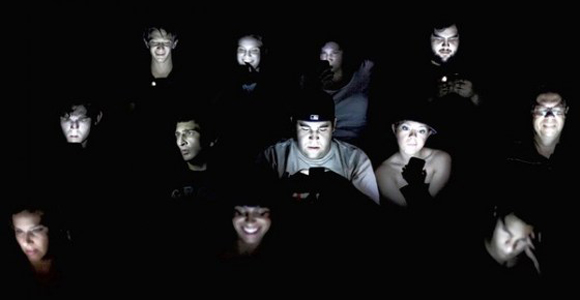
For those of you who don't already know, I (unsurprisingly) work at a movie theater. I've heard horror story upon horror story about the worst of the movie-going public - the texters, the talkers, the personal space invaders and obnoxious popcorn chewers. However, I still can't help but be stunned whenever I check up on a theater, and in the very first row, will find some snapback-adorned palooka with his iPhone lit like an emergency beacon. An additional piece of trivia about the physics of light: if it faces you, I WILL see your big dumb face. But I digress.

On Saturday, I went to go see Victor Frankenstein after work. It's around 10:30 at night, and like usual, I walk in, before the previews, to an empty theater. I take my seat in the top row and start crossing my fingers, hoping I'll get the rare but joyous opportunity to catch a flick solo, where I can act out my own episode of Mystery Science Theater 3000 in comfort.

Ten minutes pass, and unfortunately, a group of five girls, aged about 10-16, and their guardian walk in. The cacophony is packed, concentrated in their posse; I'm getting a Doppler effect as they head up the ramp to enter the theater. At this point, my reaction isn't any different than on any other night. I expect them to sit somewhere near the front, to be able to lean their feet on the railing and chatter amongst themselves. But then, the youngest one makes something known that immediately concerns me: "Screw it, I like to sit in the top row!"

The group sits two seats to my right. They chatter, squawk text, snap selfies - typical stuff. The previews haven't started yet, so I'm on my phone too, playing games. Once the previews start, I null the brightness and tuck my phone away from them, so as not to disturb. I'm a bit unorthodox with phone etiquette. I'm at the movies so often I see the same previews repeatedly; I'd rather play on my phone. This is why I sit in the top row, so the dim light of my phone doesn't distract any eyes above me. Am I overthinking? Probably, but I'd rather not be "THAT guy".

If I'm overthinking, their brains have left the building. They continue their conversations about tacky girls (irony), eyeshadow, and the infinite spookiness of jump-scares. I'm getting annoyed, but I rationalize with myself: "It's just the previews, Daniel. They'll probably quiet down once the movie starts."

My hypothesis is soon put to the test, and my (seemingly) educated guess about common courtesy and appropriate social conduct is shot down, burned to ashes, and spit on. Their phones flash. Their voices grow louder. Their words overlap and buzz like locusts, echoing off the walls. Popcorn is spilled, and in a top-notch "prank", the rest of the bucket is dumped on the girl in the middle. The youngest one and her friend run down the stairs and perch themselves on top of the wall dividing the other set of stairs and entryway.

Two seats away, I'm fuming. My mind races to find a solution, the atom bomb of comments that will command the return of glorious silence. Are these the people who back down to a rebuke or a polite request? Do I talk to them or one of my manager friends? Do I let the guardian (and probable parent) do the gruntwork? How long will I stand this before instinct slits the throat of civility and I launch into a fury?

Suddenly, the youngest pipes up, "I bet you the guy next to us is sitting there like 'I am in hell right now', haha."

Stop everything. This comment says it all. If they were doing all the actions I mentioned before a couple rows in front of me, I could give them a defense of ignorance. But here, this little girl outs the entire group. You know what you're doing is wrong. You have enough social awareness and understanding to know that I'm probably annoyed and infuriated with your actions. Still however, you continue. You pursue your obnoxious agenda, willfully dismissive of anyone else's feelings but your own. You are happily disrespecting me. I feel like this should be the moment when I go postal, but surprisingly, I don't. I watch the movie all the way through, and as soon as the credits hit, I get out of there. I don't give them dirty looks. I don't curse. I don't even say a word. I just leave.

I'm still not sure why I didn't say anything. I'm not good with confrontation, and the last thing I wanted was to take a baseball bat to the hornet's nest and deal with retribution. However, I'd be totally justified; even the guardian tried shutting them up at a few points (to no avail). I guess I'm just aware enough of myself to know that if I spoke with that level of anger, nothing positive would occur from it. As much as I'd relish the shiver-inducing bliss that comes with a well-placed flash of righteous, berserk anger, I decided to be the bigger man.

I know the movie-watching experience is changing. Streaming services are more popular than ever. Netflix and Amazon are getting industry-recognition for their original works (Netflix's Beasts of No Nation has even been sent to the Academy for Oscar consideration). People watch new releases in the comfort of their homes, where they won't be chastised for talking or multi-tasking on their phone. Perhaps I'm an old fogey for even taking the time to write a post like this. Hell, in twenty years, we'll probably go to the movies and sit in bubbles with our own private screens.

But for me, this story isn't about the movie-watching experience. It's about respect. So I urge you, reader, be aware of your surroundings. Extend to your fellow moviegoer the courtesy you would hope they'd give, and I promise, we'll all be in a kinder, happier, better place...and we won't want to key your car in the parking lot.

Thank you all for reading, I'm the Man Without a Plan, signing off.

Sunday, November 22, 2015

"Creed" Review

It's easy to go meta when talking about Creed. Adonis Johnson (Michael B. Jordan) undergoes a balancing act, juggling his personal merits wit the pressures and expectation that befall him as Apollo Creed's son. In the same manner, Creed has to maintain the spirit of the Rocky series preceding it, but offer the kind of originality necessary to stand strong on its own, to justify its existence in a series whose last film (2006's Rocky Balboa) already served as a triumphant swan song. And it's with chest-palpitating excitement I report that not only does Creed succeed, it's one of the best in the entire franchise.

Rocky Balboa (Sylvester Stallone) and Apollo Creed (Carl Weathers)
Apollo Creed (played in Rocky I-IV by Carl Weathers) was the former heavyweight boxing champion in the world, the man who gave Rocky Balboa (Sylvester Stallone) the underdog's chance at the belt. During the peak of Apollo's career, Adonis was conceived, the product of an affair, but unfortunately, before his birth, Apollo died during his match with Ivan Drago. Adonis's mother died later in his childhood, so he was kicked around from foster home to juvie detention center until Apollo's widow, Mary Anne (Phylicia Rashad) found and adopted him.

Adonis grows up, sharing his father's penchant for boxing. He studies all of Apollo's fights, sneaks across the border to participate in Tijuana bar brawls, and quits his cushy accounting job to pursue boxing professionally. Moving to Philadelphia, Adonis hopes to train under Rocky Balboa, and make his own mark outside of his father's legacy.

Adonis Creed (Michael B. Jordan)
What Whiplash did for Miles Teller, Creed does for Michael B. Jordan. He delivers a muscular, magnetic, multi-layered performance.  Not many actors walk a tightrope of braggadocio without either being unconvincing or irritating, but Jordan dances upon it well, reminiscent of early Will Smith.

Given Adonis' identity crisis, I find myself a bit more tolerant of his ego trips. The bulk of the movie sees him try to escape his father's shadow - he almost starts a fist fight after being referred to as "baby Creed" and there's one scene where he's watching an Apollo-Rocky fight on YouTube and shadowboxing...as Rocky. However, for all his efforts, Jordan betrays a sentiment in Adonis, that perhaps he's not fully ready to abandon his upbringing; something may be pulling him back towards his father. 

Stallone delivers his best performance in a decade, and really, what else would you expect from his career-defining role? Rocky still lives a simple life; he works at the restaurant, looks after his turtle, and continues to visit Adrian's grave, bringing flowers every time.  However, the "beast" that sat in his heart in Rocky Balboa has been purged; Rocky approaches life more peacefully, with an awareness and acceptance that he's achieved everything he ever desired, and has no qualms about waiting for time to eventually sweep him away. The film allows us to view a more developed state of introspection about Rocky's deteriorating health, a recurring theme from the end of Rocky IV onwards, and it's fascinating, though bittersweet, to witness Rocky living through such a vulnerable period of his life.

Jordan & Stallone deserve their praise, but Creed's true star is writer-director Ryan Coogler (Fruitvale Station). His screenplay (co-written with Aaron Covington) and direction are lean and focused. No scene goes on longer than it's supposed to, and when the film starts going into familiar territory (a liar revealed, the couple fighting, etc.), he makes sure to nip it in the bud and prevent the movie from lingering on. His story deals with heavier subjects - infidelity, mortality, abandonment, but it never feels alienated from the rest of the franchise. This is one of the few times a PG-13 feels right at home with the subject material, never watered down. 

The boxing is done phenomenally. Adonis swings blows with his opponents, raw and no-holds barred, but the camerawork is smooth, tracking each fighter as they go for broke, are propped against the ropes, and formulate strategies. To the casual eye, these scenes will fly by, unassumingly. However, the best illusionists present their work unannounced. These fights are remarkable because they're seamless, a window of time in which director, cinematographer, actor, choreographer, and camera operator are in sync to present a fight from the point of view of where a referee might be standing. Coogler smooths out the motion, dims light, mutes sound, orchestrating these fights to be exhibited almost like gallery art. The boxing ring is his canvas, and he plays it well.

Creed is one of 2015's best thus far; it takes a formula we've seen before, even up to this July with Southpaw, and breathes new life into it. Coogler directs a faithful, ambitious addition to the franchise, and does it with aplomb. I keep hearing Oscar talk for Stallone as a supporting role, and I can't say I'm opposed. With this film, Michael B. Jordan should become a household name. Creed motivates, excites, tugs at heartstrings, and inspires. At the end of the film, you'll want to run up those now-famous steps of Philadelphia's Museum of Art, and really, that's when you know a Rocky movie is done right.

It comes out on Wednesday. Head to the theater and have a blast.

Thank you all for reading; I'm the Man Without a Plan, signing off.


Wednesday, November 18, 2015

"Love the Coopers" Review

Readers, if I may be frank with you all for a moment, there are days when I hate doing this. This schtick of not choosing my review until I get to the theater, often leaving it up to a coin flip, has landed me in some pretty deep dung - The Gallows, Max, etc. My reactions result in anything from disillusionment to violent, vocal hatred, and while the review serves as a way to purge myself (that's another franchise with a tendency to boil my blood), the initial experience remains a test of patience. 

So during Love the Coopers, if you were to walk in, you'd find me in the far back corner, hoodie up, fist under cheek, contorted in a manner that grasps at straws to be comfortable. I'd convince myself that twenty minutes had to have passed by now. I check my phone, and it's only been eight. I do this three times. And as I continue to watch talented people portray miserable, unfunny characters, I feel like a schoolkid, coiled up and waiting for the bell. What runs through my mind? "Just remember all the good the purge does."

Love the Coopers follows the members of the Cooper family on the days leading up to their big Christmas dinner. The reunion's at Charlotte (Diane Keaton) and Sam's (John Goodman) house; they're falling out of love forty years into their marriage. They have two kids. Eleanor (Olivia Wilde), a failed playwright hiding her sadness behind sarcasm and a martini, and Hank (Ed Helms), a recently unemployed divorcee trying to get a job in time to pay for his kids' Christmas presents. Who are his kids? There's Charlie (Timothée Chalamet), an awkward teen crushing on a girl; Bo (Maxwell Simkins), a goodhearted kid searching for the perfect present to remedy his and Charlie's friendship, damaged after the divorce; and Madison (Blake Baumgartner), a slightly potty-mouthed version of Michelle from Full House. Also arriving at the dinner table are Charlotte's jealous kleptomaniac sister, Emma (Marisa Tomei); Charlotte and Emma's lonely father Bucky (Alan Arkin) and his lover or maybe just a good friend, Ruby (Amanda Seyfried); and Sam's memory-loss-stricken Aunt Fishy (June Squibb).
...did you get all that?

Let's not kid ourselves - I don't expect Shakespearean development from a Brady Bunch-sized ensemble cast. And it's not like we need that to make a good film, case in point, Love Actually. Love Actually also featured simple characters with problems of their own, but they were written in a manner that allowed us to empathize and sympathize with their choices. They charmed us, warmed our hearts, resembled us in our bright and dark moments. So when in Love the Coopers, Eleanor denigrates a soldier (Jake Lacy, one of the film's few highlights) for his Republican and Christian beliefs for no reason, or Sam whines about a trip to Africa he was going to take with Charlotte before they had kids, citing this as a solution to save for their crumbling marriage, it confuses me. These characters don't resemble us, they're caricatures - hollow, tiresome caricatures.

Jake Lacy possibly inspecting a sudden growth on Olivia Wilde's face.

And that's not to say these characters are invalid or boring because they're jerks. In recent memory, Aaron Sorkin's script for Steve Jobs surprised me by making the man out to seem even more of a douchebag than in Jobs featuring Ashton Kutcher. However, Sorkin writes with eloquence. I understand why his Steve Jobs thinks and acts the way he does, and even though I think the character's a jerk, the script provides a comprehensive and unique spin on the archetype. It can be done with a skillful script, something Love the Coopers sorely needs.

The film's directed by Jessie Nelson (Corrina, Corrina) and her direction seems confused. Some scenes, especially near the beginning, are shot almost like a documentary or news footage as the film shows montages of Christmas images, in reference to the holiday's spirit and commercialism. This is juxtaposed with moments of random CGI - most odd being Olivia Wilde's spontaneous glassy combustion (Just had a moment of sobriety - that sentence is a strange one). Conversations are often choppy - one character is shown, then the other, back and forth with such little variety that I can't help but wonder if the actors are even in the same room.

As Love the Coopers nears its ending, I've already checked out. The last half hour is predictable, save for a disappointing resolution with Bucky and Ruby's subplot, and (mercifully) rushes by so fast, I don't have time to let it sink in before the credits roll. As soon as the credits scrolled up, I was out of my seat and gone. Though you shouldn't try to beat my land speed record, this movie's not worth your time.

Thank you all for reading; I'm the Man Without a Plan, signing off.


Friday, November 13, 2015

"The Peanuts Movie" Review

The Peanuts Movie is the comic strip, and that's just what it needed to be. For Peanuts as a property occupies one of the few truly unique places in literary history, a genuine look at childhood through a child's eyes, filtered through adult sensibilities. As opposed to many pieces of family entertainment, which operate on a sensory level, with blasts of color, motion, and light, Peanuts focuses on emotion. Whether it's Charlie Brown's melancholy, Lucy's bitterness, Linus' empathy, or Snoopy's zaniness, Charles Schulz took his characters seriously, even if they were dealing with small stuff - losing a kite in a tree, pretending to be an ace war pilot. As adults, I think we forget that a child processing their emotional understanding of the world is a legitimate act, and I think Schulz argues just because our experience gives us wider perspectives of understanding, we shouldn't belittle, trivialize, or patronize them. Thankfully, the movie keeps Schulz' spirit in mind, crafting a faithful homage to his vision - the kind of family entertainment we need.


The film focuses, as it always does, on Charlie Brown (played with surprising range and depth by Noah Schnapp; he also plays Tom Hanks' son in Bridge of Spies), a wishy-washy, goodhearted kid for whom nothing seems to go his way. He can't fly a kite, can't throw a pitch down the plate, and when he messes up, weathers the groans, eye rolls, and cries of "YOU BLOCKHEAD!" from the other kids. However, when a little red-headed girl moves in across the street, Charlie falls head over heels, and tries everything to make the best first impression.

Peanuts is laid-back, and more episodic than linear. As a result, the movie's rhythm varies, and can progress leisurely. Fans will be used to this; Peanuts has always, to me, resembled a lazy summer afternoon with my friends. I'm not sure how kids growing up on Hotel Transylvania, Despicable Me, and the Ice Age sequels will respond, but the film is definitely a change of pace.  

I own two Peanuts collections: Peanuts - A Golden Celebration and Peanuts Treasury. I read them nigh-religiously in my youth, so as a fan, I'm pleased to spot all the references to the comics. Fans will find a smorgasbord of Easter eggs; the screen is laden from top to bottom with nods to specific strips, creators and producers, and little secrets that give insight into the Peanuts universe (the sequel will probably split into two parts and make Charlie Brown into Hawkeye). My pleasure's not with the amount of references, however, but with how well they're integrated. There's a callback to the comics when Marcie tries to wake up Peppermint Patty in class; in the strips, the punchline ends in either Patty blurting out a wrong answer, Marcie inventing a ludicrous device to make it look like she's awake, or some witty banter with Marcie and Miss Othmar (here, she's played appropriately by jazz musician Trombone Shorty). The joke from the comic hits, and in a lesser adaptation, that would be the end of it, but it comes back at the end of the scene, becoming the catalyst for another plot point. These scenes showcase the great care Craig and Bryan Schulz (Charles Schulz's son and grandson, respectively) took in writing the script, to not only jam every comic into ninety minutes, but service the film first. 

Each voice actor nails their character perfectly (I give special shout-outs to Alexander Gaffin's Linus and Venus Schultheis' Peppermint Patty); it's not easy to deliver this kind of dialogue. The Peanuts kids aren't your regular kid characters. These are the kids that forgo lemonade stands to be psychiatrists, use Leo Tolstoy's War and Peace for a book report, and lean on brick walls for hours philosophizing about their existence and happiness. They also ride broomsticks like cowboys, go ice-skating, ride carnival rides, and trick or treat. Schulz wrote his characters like actual kids, curious enough to explore the adult world, but naive enough not to fully get it or be disillusioned by it.


And this is where I think these characters shine and what the film understands and gets wonderfully. Oscar Wilde, in his 1889 essay The Decay of Lying, theorized that "Life imitates art far more than Art imitates life," and thus sparked a debate in what's better, characters that reflect how we are, or characters that we aspire to reflect. The genius of Charlie Brown is that he is both - as much insecure and prone to failure as he is brave and compassionate. Both sides of Wilde's coin are satisfied and can find comfort in Charlie, can empathize and sympathize with his plights and his hopes. He is both eternal pessimist and optimist, reflecting the entire gamut of our emotional understanding. Through his stories, we can hold up the mirror to ourselves, and through Schulz's spirits and his descendants' writing, find strength, hope, and the joys of life in its most irritating. After all, it's only through falling on our backs that we finally learn to kick the football.

In this regard, The Peanuts Movie is rare, a brief microcosm of not just society, but life. Through careful and skillful film making, the film finds ambition in familiarity, and in its wonderful balancing act of modernizing Peanuts and keeping the comic's identity alive, comes off just as timeless, just as unique, and just as important to us all.

Thank you all for reading; I'm the Man Without a Plan, signing off.