Friday, April 29, 2016

"Sing Street" Review

Sing Street is deceptively simple. I don't mean that a "boy meets girl" trailer turns into a critique of the universe. Rather, the movie does what great films do: take a basic yet enjoyable plot; splash on a coat of eye-catching fashion; lure and then latch you onto the emotional bedrock of it all. Sing Street is a story about a teen who starts a band to impress a girl. It's set in 1985 Dublin, infused with the eyeliner, funk, and neon of new wave. But once the lure is set, the magic hits. That's where Sing Street becomes a film about finding passion, taking risks, and the joys of living somewhere that both nurtures and condemns them.

Conor (Ferdia Walsh-Peelo) is a teen whose family is in a financial slump, so they move him to a new Catholic school called Synge Street, full of fights, bullies, and an intimidating, rule-worshipping headmaster (Don Wycherley). Underneath Conor's shy exterior is a clever, ambitious mind, so he becomes the bravest dork and chats up the cool, aloof Raphina (Lucy Boynton) across the street. She tells him about her modeling career; he asks if she'd be interested to star in one of his band's music videos, and she accepts. The only problem? Conor doesn't have a band. So he rustles up a gang of misfits, borrows his older brother's (Jack Reynor) records, and with his band, Sing Street, enters this brand-new crazy world of new wave.

Duran Duran, The Cure, The Jam, Motorhead - the film's entrenched into this golden age of British music (not to be confused with the golden ages of the British Invasion, New Wave of British Heavy Metal, Britpop, and Garage Rock Revival).

As Conor gets into a band, he ends up borrowing their style, both music and fashion. Sporting blue eye shadow and blond streaks, he uses a baritone croon through a funky, synth-laden Duran Duran rip-off called "The Riddle of the Model." How can you not love that title? As soon as he gets a hold of the Cure, Conor launches his black hair into the stratosphere, writing acoustic-driven "happy-sad" music.

You'd think these pastiches would get annoying, but I'll be damned if this isn't one of the best soundtracks I've heard in years. The kids are all extraordinarily talented, especially the rhythm section (Karl Rice on bass and Conor Hamilton on drums). Sing Street's set comes off as a sampler of the decade, a who's who of new wave without having to suffer through covers.

Sing Street is like other '80s family films - namely Back to the Future, The Goonies, Ferris Bueller's Day Off - in that it presents the characters realistically. The teens aren't stereotyped as thugs or romanticized as soda pop drinkers and conduits of lame jokes. Walsh-Peelo doesn't have quite the level of charisma as Michael J. Fox, but he's approaching it. Boynton is spunky, smart, and funny, sharing stellar chemistry with Walsh-Peelo. The rest of the band members have their time in the sun, making for great comic relief.
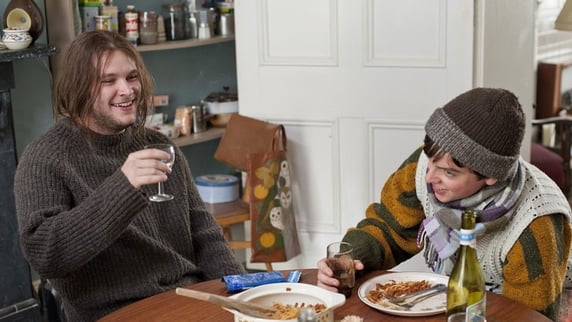
Jack Reynor is extraordinary as Conor's older brother, Brandon. As someone who obsessively lines his own shelves with pop culture and a wealth of records, I saw a bit of myself in him. The environment Conor lives in, one full of divorce and growing pains, discovery, passion, and rejection, is harsh, difficult to navigate. Brandon serves as Conor's most faithful member of his corner, constantly challenging and motivating him to be better. He's a character who's failed in his endeavors, so if he can push Conor to succeed and carve his own path, he'll feel vindicated in that regard.

My brothers don't want to start a band, but I can't help but feel that urge to watch over their growth: to help them avoid pitfalls or offer different perspectives in life in ways my parents can't. Director John Carney dedicates the film "for brothers everywhere," and that reminder to encourage and support the young men I love hit home.

With Sing Street, Carney reaffirms his proficiency in making music dramas. I love this more than Begin Again, and it seems entirely possible, like in 2014, that a John Carney film will make it to my top ten list at the end of the year. Sing Street is a charming, thoughtful coming-of-age film that packs heart, wit, and loads of style.

For those about to rock, I salute you.

Thank you all for reading. I'm the Man Without a Plan, signing off.


Sunday, April 24, 2016

"Ratchet & Clank" ADVANCE Review

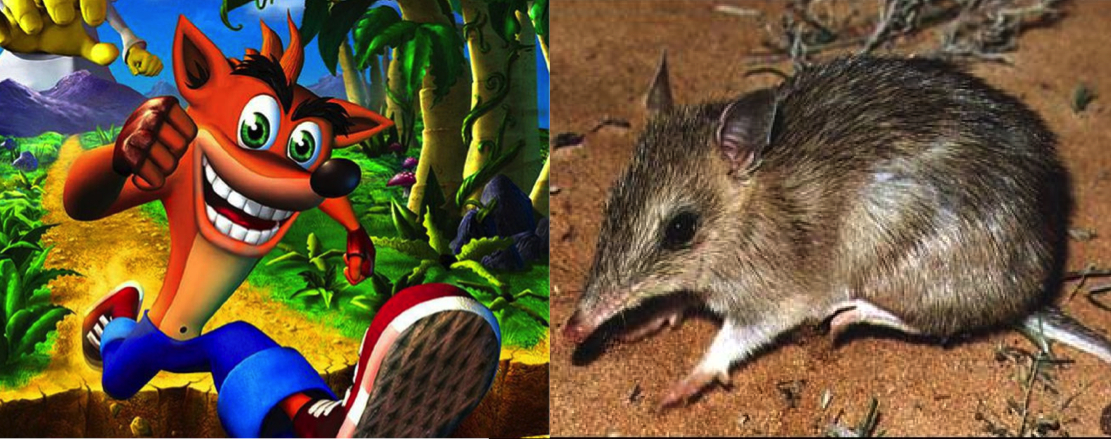
As an 8-year-old, my favorite video game was Crash Bandicoot on the PlayStation. I loved the spinning marsupial so much, I made my own series of poorly illustrated 5-page books about his adventures. Needless to say, they sucked - I explained a boost in Crash's powers once by morphing him with Goku and Wolverine - but the love was there, the love of telling stories about really cool bandicoots.
...I didn't play for the realism. At least the real one's cute.

I never played Ratchet and Clank. I opted for a Nintendo over a PS2, but the duo were Crash Bandicoots to a new generation, and as such, popular enough to get a movie made about them. And just like my 3rd-grade fan-fiction, the story's bonkers and rips off a lot, but the love is still there.

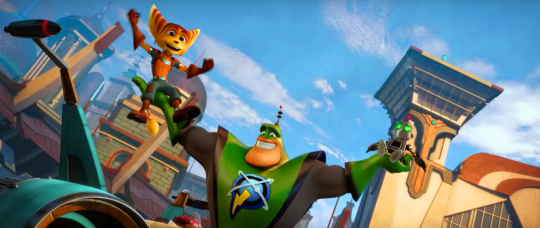
Ratchet (James Arnold Taylor) is a Lombax (think a cat with fox ears and a lion's tail) working as a mechanic on the desert planet Veldin. He dreams of joining the Galactic Rangers, saving the universe alongside his idol, Captain Qwark (Jim Ward). When Chairman Drek (Paul Giamatti) starts vaporizing planets with his Deplanetizer, the Rangers search for new recruits to help take down the menace. Ratchet tries out, and being a runt, he flunks. But after coming across a little robot named Clank (David Kaye), who has Drek's plans; and accidentally saving the city, the two team up with the Rangers to stop Drek.

The only thing missing is a cantina - the movie is Star Wars from beginning to end. It's not just characters: dialogues, shots, and whole scenes are lifted. Ratchet racing his ship through the caverns is almost a replica of the podracing scene in The Phantom Menace. This isn't a note-for-note ripoff; neither is it cynical, like Starchaser: The Legend of Orin. The film playfully parodies the movies, and while some of it falls flat, other jokes are gems (acknowledging how horribly under-equipped the four Galactic Rangers are against Drek and his legions of Warbots).

The movie also throws in references to other movies; callbacks to old PlayStation games; "current" jokes about texting; winks to the audience that the movie is self-aware to varying degrees of success. At best, I chuckled; at worst, my eyes rolled.

None of the characters are bad, but few stand out. Ratchet is the bumbling, naive hero; Clank sounds like a British professor talking to a fan. Jim Ward is enjoyable as Captain Qwark, hitting the sweet spot of lovable idiot and narcissist. His expressions are priceless, and when I laughed, it was mostly because of him.

The action is rapid, quick-reflexed. Ratchet and the Rangers (band name, anyone?) cycle through weapons in the blink of an eye: ice blasts, fusion grenades, flamethrowers, and the Omniwrench (nothing special, just a really cool name). We get a great variation of ground assaults, space chases, and one-on-one dukefests. All in all,  if a video game is to become a movie, this is how you translate levels to the big screen.


I don't know why Super Mario Bros. couldn't have been handled right the first time. The job is fool-proof: make an adventure starring two brothers saving a princess from a bad guy. It doesn't need time travel or a dystopian future, or Dennis Hopper screaming "Monkey!" Just keep it simple, that's where Ratchet and Clank shines. The game wasn't a sprawling epic, so why would the movie be? The joy is in the action and wacky humor, and that's what the movie gives us, nothing more nor less. If you have kids, aged 4 to 10, they'll have fun with a matinee. This serves best as a solid rental. Thank you all for reading. I'm the Man Without a Plan, signing off.

Ratchet and Clank comes out April 29th.


Saturday, April 16, 2016

"The Jungle Book" (2016) Review

Why don't I like The Jungle Book (2016)?

I woke up today with that question at the top of my list, perhaps carried over from the exhaustion of a late night screening. (Judging by my girlfriend's refusal to move even an inch off the bed, I guess exhaustion still has her.)

The Jungle Book from 1967 is favorite Disney movie. I exclude Pixar because I associate "Disney" with hand-drawn animation and videocassettes. And that's the way I remember the movie: a worn-out VHS, fruit snacks, and a second-grade voice singing to "I Wanna Be Like You."

So is nostalgia to blame for my irritation when I learn Richard M. Sherman (co-writer of the original song) changed an entire verse so he could apparently shove as many mentions of the word "Gigantopithecus" as possible?

Well, yes, but not entirely.

A shot-for-shot remake wouldn't be much better - at best, pointless, and at worst, Gus Van Zandt's Psycho - so in an effort to balance myself out, I'll go point by point and give you Jekyll and Hyde, the critic and fan.


1) Story:

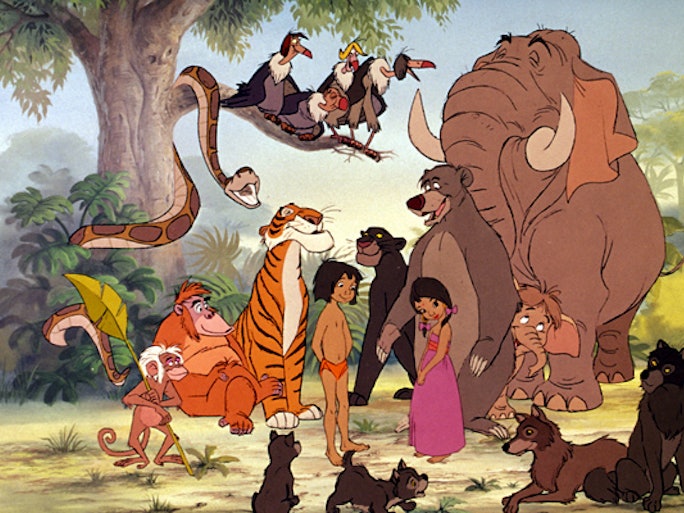
          Jekyll (critic) - The premise is shared between both versions: Mowgli (Neel Sethi) is a boy who was abandoned in the jungle as a baby. Found by Bagheera the panther (Ben Kingsley), he's sent to live among the wolves. The fact that Mowgli's not as good at being a wolf as his siblings is the least of his worries - he's being hunted by Shere Khan the tiger (Idris Elba), whose hatred of man fuels his desire to see Mowgli, and anyone in the way, dead. Bagheera offers to escort Mowgli to the safety of the Man Village, and along the way, they come across a cast of colorful characters, including Baloo the bear (Bill Murray), Kaa the snake (Scarlett Johannson), and King Louie the orangutan (Christopher Walken).

Outside of the premise, there's little point in comparing the two.
       
The cartoon is a light-hearted musical comedy about a blissfully ignorant youth forced to face the harsh realities of the world. The sunshine is rarely broken, only by Bagheera's sternness or Shere Khan's attacks, which fits Mowgli's development.

The live-action version is a more straight-forward adventure which sees Mowgli in constant peril. The story is more concerned with the boy's heroism, and asks how a human can fit productively in the animal kingdom.

This newer film, while exposition-heavy, tells its story well, making the message accessible and relevant to all ages. I have some problems with pacing - some scenes are chopped and screwed to where the emotional payoff doesn't do it for me - but overall, it's executed well.

          Hyde (fan) - The remake doesn't go all the way with the darkness, to match Rudyard Kipling's books, so we get watered-down comedy and action. When the cartoon went dark, it caught me off guard. The juxtaposition of comedy and drama made the drama more intense.

In trying to be realistic, the movie drained the fun. It was boring, to the point where my girlfriend fell asleep.

2) Characters:


Jekyll - Two big positives here: Bagheera and Mowgli. Kingsley nailed Bagheera's uptight, protective nature, while Sethi was adorable, bratty, kind-hearted, and funny - he was Mowgli!

I like the update to Kaa. Johannson's sweet, lulling whisper made the character even creepier, a notch I give over the original.

Lupita Nyongo is great as always. She plays Mowgli's adoptive wolf mother, Raksha, with strength passion and nuance.

          Hyde - What the hell did they do with Baloo? He's a dick! I don't blame Bill Murray; he can play a wise-cracking con artist in his sleep, but it's not Baloo, the lovable absent-minded oaf.

I love Christopher Walken. I love King Louie. I love Christopher Walken AS King Louie. I don't love King Louie as King Kong. Outside of a pointless action scene, there's no need for him to be a giant. The original was fun and inviting, but most importantly, sly. It's hard to be sly when you're five stories tall.

I've a weird bone to pick with Shere Khan. The strength and evil is there, but the original had a regality, an arrogance that made him fun to hate.

There's some of this in Elba's performance - a scene where he tells the wolf cubs a story is deliciously sinister - but it's nothing compared to George Sanders, who relished in every drop of malice.

Elba's Shere Khan operates out of "righteous" anger, masking his mania with a plea against the corruption of man. Not to say I don't appreciate a morally complex villain, but one who won't even TRY to reason with you is scarier than one who does.


3) Design:

          Jekyll - Jon Favreau has crafted a gorgeous film. Not since Tarzan have I been this excited watching someone whip through the trees and brave the jungle. The action-movie angle works best here; the landscapes are diverse, and just as perilous as they are breathtaking.


Surprisingly, the element I worried about the most, the animals' CGI, worked wonderfully. I grew up watching animals stare stone-faced into the camera while an actor dubbed a voice-over. To see these characters come to life, in a way that mixes imagination with reality, is extraordinary. CGI is usually associated with laziness and cheap film-making, it's great to call this the exception.

          Hyde - ...ditto.

4) Music:


          Jekyll - The Jungle Book (2016) often missed the spirit of the original, but when it broke into "The Bare Necessities," my childhood came roaring back. Sethi and Murray's voices blended great together; it's as if all the joy from the cartoon was contained in that microcosm.


          Hyde - (to Favreau, John Debney and Richard Sherman) All the goodwill you earned on "Bare Necessities" was lost during "I Wanna Be Like You."

That sequence wasn't a Louis Prima party. There were no trumpet-blowing monkeys nor swing dancing. It should've been fun with an agenda, as King Louie is. Instead, it felt like a villain's song. How does that make sense?

Also, no "That's What Friends Are For?" For shame.

---------------------------------------------------------------------------------------------------------------------------------------------------------------

So what do we get when we bring Jekyll and Hyde back together? A concession.

I don't think The Jungle Book (2016) is a great movie; it's clumsy in tone and pacing, enough to be a distraction. However, I don't think it's a bad movie, at all. For what it is, its own story and feel, it's imaginative and extraordinarily well-made.

This film's for a new generation, a new fable to be told. As a fan and nitpicker, I can't say I liked it, but don't let that stop you.

Thank you all for reading. I'm the Man Without a Plan, signing off.


Sunday, April 3, 2016

"God's Not Dead 2" Review

Did you ever see Birdman?

Of course you did.

Remember that scene where Michael Keaton drunkenly walks past a crazy guy (Bill Camp)screaming at the top of his lungs? I've referenced his quote before - it's from Shakespeare's Macbeth - "it's a tale told by an idiot, full of sound and fury, signifying nothing."

I bring up Birdman to borrow Camp's sentiment: the anguish and rage, desperation and melancholia that he knows will rattle only on deaf ears.

So look at this scene...
(Skip to 2:22)

And imagine it's me yelling about God's Not Dead 2.

In the sequel to Pureflix's popular Christian drama, Melissa Joan Hart plays Grace Wesley, an Arkansas high school teacher who gets in trouble where her answer to a student's question brings up Jesus' teachings. The student's parents are offended, and the school board asks Ms. Wesley to apologize. She refuses, defending her right to speak her beliefs, and the parents file a lawsuit. 

On Grace's side is a non-believing rookie lawyer (Jesse Metcalfe) assigned to her by the teachers' union. On the parents' side is an anti-Christian prosecutor (Ray Wise) from the ACLU, taking the case to the Sixth Circuit Court of Appeals. He hopes to prove once and for all - in a line so deliciously overdone, it's only missing an evil laugh and lightning - that "God is DEAD!" 

What follows is the courtroom equivalent of "David vs. Goliath" and by this point, if you've ever seen a movie, you know how this ends.


Grace is aware of the implications surrounding talking about Jesus in school - Hart sells her hesitation well - and the dialogue tiptoes through the incident, conveying to any rational person that she's not preaching. Sure, this makes the opposition look trigger-happy, but it also shoots the movie in the foot. So much of the movie is spent arguing the separation of church and state; prophesying a doomsday scenario for religious liberty; even arguing the existence of Jesus Christ as a historical figure. (Maybe it's because I was raised in a Baptist home, but I'm pretty sure it's common knowledge that Jesus, at least as a guy, existed.) This lengthens what should be a 20-minute case by an hour.

"But Daniel," you ask. "Isn't the movie two hours long?" Why yes, reader, yes it is. The remaining forty minutes go to subplots. Like the first, the movie rips off Magnolia or Crash (take your pick) in having four to five separate story lines that (occasionally) weave into each other. 
This is where most of the recurring characters from God's Not Dead lie: Amy (Trisha LaFache) questions her atheism after her cancer suddenly goes in remission; Martin (Paul Kwo) develops his new-found faith to his father's dismay; Pastor Dave (David A.R. White, founder of Pureflix, but better known on the Internet for the following clip*) deals with a jury summons and a random subpoena meant to acquire transcripts of his sermons. These stories and many more are edited into the narrative so sloppily, it feels like a TV-watching session where I started with an episode of Law and Order, got bored, and started channel-surfing.

*David A.R. White in Second Glance

The whole affair feels like the weekly list of grievances from the evangelical right. While the stereotypes aren't as shockingly offensive as the first, and Martin's subplot could be worked into a respectable sequel of its own, it just doesn't warrant that much thought or outcry. To borrow again from the Bard, God's Not Dead 2 is much ado about nothing.

Thank you all for reading. I'm the Man Without a Plan, signing off.


Sunday, March 27, 2016

"Batman v Superman: Dawn of Justice" Review

This week belongs to Batman v Superman: Dawn of Justice - the hype, the box office, the slew of bad reviews and the memes that follow (sad Ben Affleck is heartbreaking).

The discrepancy between the critics and audience is staggering: 29 vs. 73 percent on Rotten Tomatoes. It seems fitting, considering Man of Steel's rocky relationship with the public. They either loved it or hated it, and there was no middle ground. Dawn of Justice seems to be following footsteps.

So where do I stand?

It's ok. It's all right. It's adequate, the very definition of middle-of-the-road. Why not put that quote on the DVD?

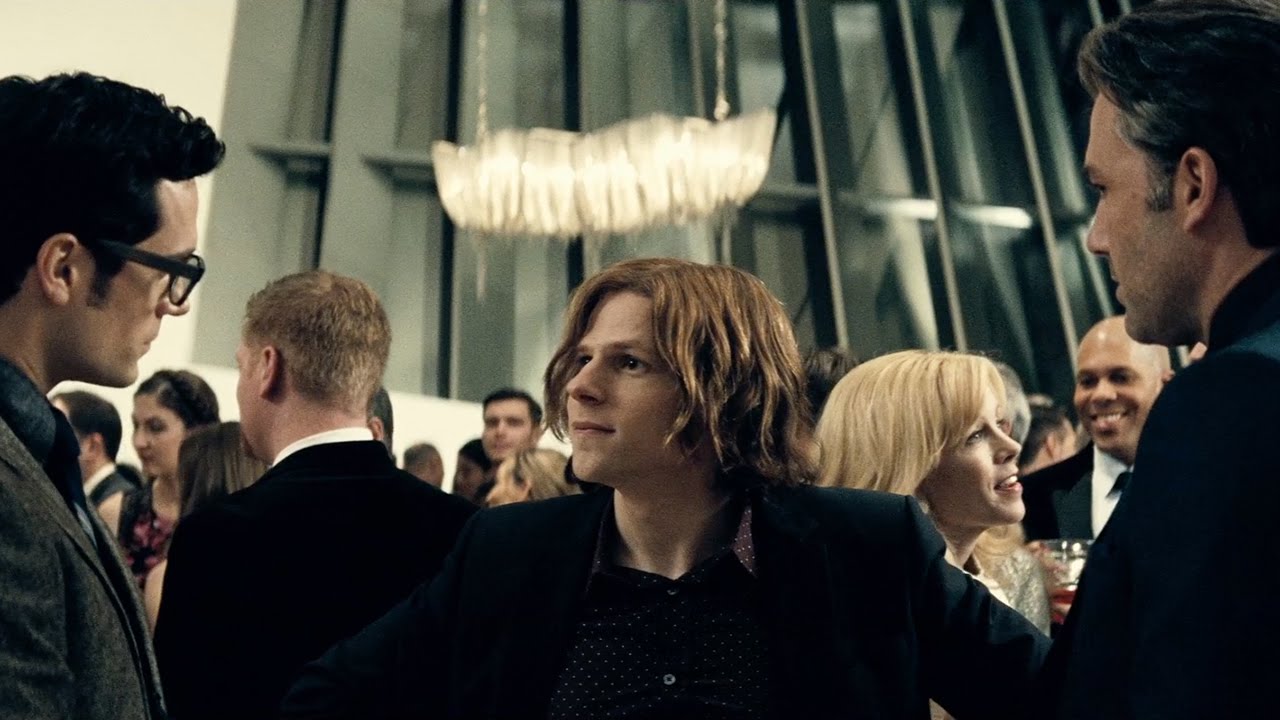
Bruce Wayne (Ben Affleck) was in Metropolis during General Zod's attack. He blames Zod and Superman (Henry Cavill) for the murder of thousands, especially his employees in the collapsed Wayne Tower. Clark Kent is investigating the Batman, and is appalled. Batman tramples on civil liberties, he says, acting as a loose-cannon vigilante.
When a string of crimes linked to Lex Luthor (Jesse Eisenberg) gets the attention of both heroes, they clash, fueled by differing ideologies, in a grudge match the likes the world has never seen. 

Except you have seen it, and what's worse, you have to wait to see it. The movie is two and a half hours long, and neither Batman nor Superman throw a punch until an hour and forty minutes in. Until then, we're given drawn-out speeches, dream sequences, and morsels of insight into next year's Justice League.

Dawn of Justice is a counterpart to Avengers: Age of Ultron. Both feature a gallery of new characters, conflicts between heroes, and the arduous task of setting up sequels. What makes Ultron work over Justice is its foundation. The Avengers was exhilarating, focusing on character and spectacle. Man of Steel liked to talk about Superman, rather than show him. Muted colors complemented the film's joylessness, and when mixed with Zach Snyder's manic direction, produced a tangled mess of CGI and exposition. For all of Ultron's faults, the fact remains: the foundation is strong. Dawn of Justice? Not so much.

Snyder returns to direct, and again has a hard time with balancing tones. In some ways, the film is darker than its predecessor - Batman brands criminals; Superman plows a man through several concrete walls; henchmen are stabbed, gunned down, and set on fire. This is juxtaposed with Eisenberg's Lex galloping and twittering like a buffoon; a random caveat in Bruce's origin where the swarm of bats whips up enough wind to get him airborne. Dawn of Justice, in essence, is an R-rated film that's forced to market to kids. (At the 10:00 screening Saturday night, I saw a toddler watching Winnie the Pooh videos on her dad's phone.) It's nonsense.

I mentioned "different ideologies" as the reason for conflict, but that's not entirely accurate. The basis of the fight comes from Frank Miller's The Dark Knight Returns. The comic plays on the fear of power unchecked. Both heroes deliver justice without the legitimacy of the law. There's no external body overseeing them, so the only force we can rely on to understand how they operate is their morality.
Superman's values are instilled by his Midwestern parents; his primary understanding comes from what's right. To deter injustice, he uses an example of righteousness. Batman learns morality through the murder of his parents. His experience stems from learning what's wrong. As a result, he fights evil with fear.

Gone unchecked, Batman's vigilante justice tramples on civil liberties, a guilty-until-proven-innocent mindset.

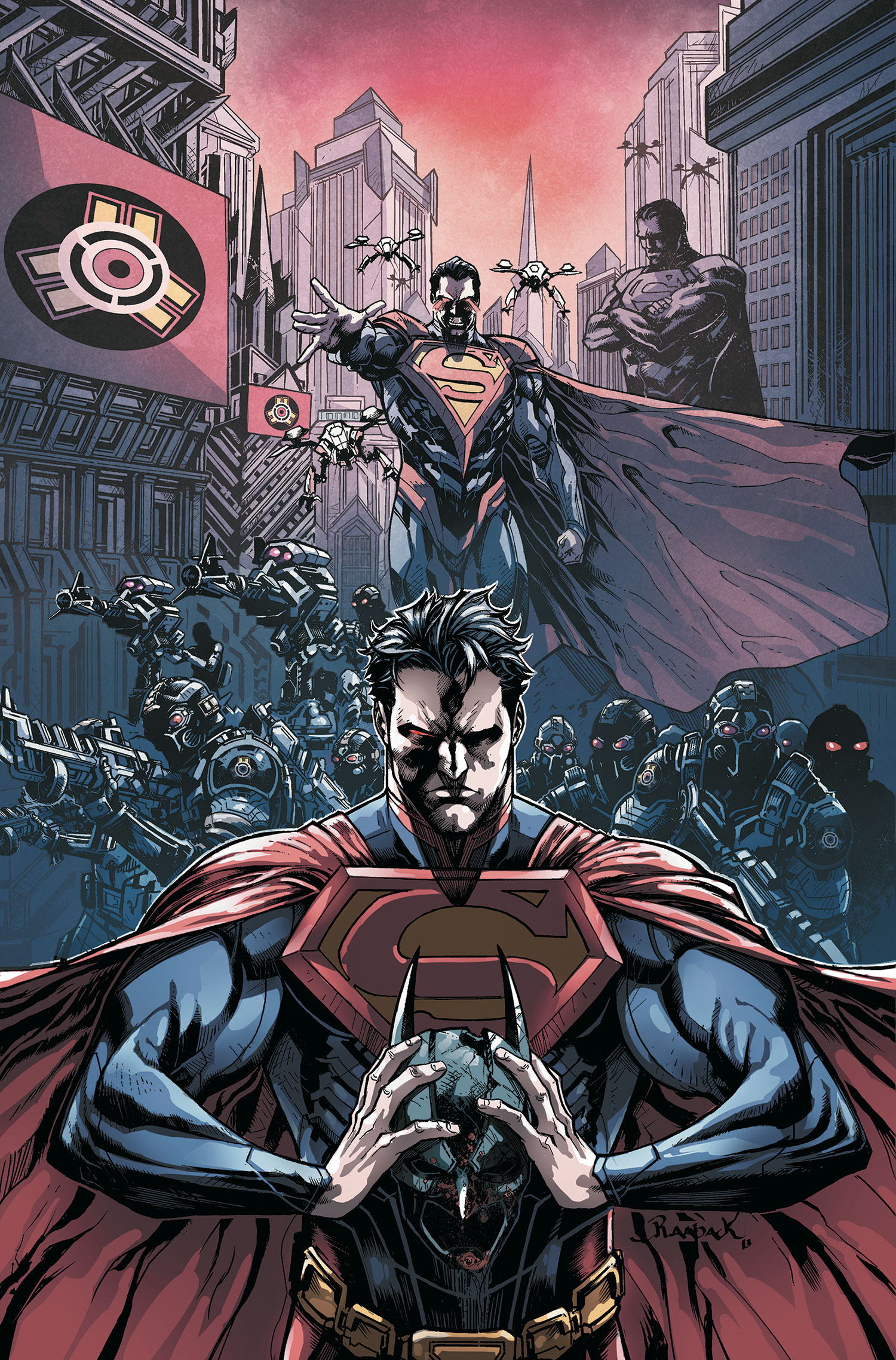
Superman's doomsday scenario is more complex. His moral code is ingrained, so we only see justice through his (ideally perfect) worldview. If Superman is corrupted (by magic, Red Kryptonite, or grief, as in the Injustice series), justice is corrupted. And the worst part? Superman has the powers of a god. A corrupt Superman becomes an unstoppable fascist dictator.


The comic keeps the fight strictly on ideology, and because time has made both men grizzled and battle-worn, their lines of morality are tested and frayed.

This story belongs near the end of a movie series, not the beginning. This conflict needs to grow and develop, naturally, to its breaking point. Instead, Dawn of Justice adds extraneous material that dilutes the conflict and character development, making the heroes seem petty. Because Justice League is next, Batman and Superman are allowed to fight, but not TOO much.

While most of my problems lie with characters, I'm satisfied with the cast. Eisenberg gives the best trainwreck of a performance since Eddie Redmayne in Jupiter Ascending. Gal Gadot, while underutilized as Wonder Woman (to the point where the only way she's integrated in a scene is by watching the action on a news broadcast), does well, capturing the spirit of the character. To relieve some fan fears, she's best when in the fight.

Speaking of fan fears, let's address the elephant in the room. Ben Affleck as Batman...is the best part of the movie. The movie's fun when Batman's around: he builds gadgets; tears through Gotham in the Batmobile; and makes mincemeat of twenty thugs in the time it takes me to take a leak. It's nice to have a Batman who's also great as Bruce Wayne. Affleck's Wayne borrows from Michael Keaton (still the king) in that he's non-assuming. For a playboy billionaire, he's got a low profile. Doesn't fit the type of guy who gets in costume and beats up punks, huh?

There's a skeleton for a great Batman movie here, and judging by Affleck's directing skills and passion for the project, his upcoming solo film shows promise.

My only strong disappointment is with Cavill's Superman, and this particularly breaks my heart. The Man From U.N.C.L.E. was my second-favorite film of last year, and there, Cavill brought swagger and cool in spades. It's not really his fault; Superman has few modes besides "fight" and "brood." While Clark arguing with Perry White (Laurence Fishburne) over the Batman story is fun, for the most part, his character feels like an afterthought. After all, look who's got top billing.

Your enjoyment of Dawn of Justice will ultimately depend on three things: how much you liked Man of Steel; how much you know about DC Comics (beyond the two leads); and how much hype you go in with. The Dark Knight, this is not. Avengers, this is not. This is extra credit. Marvel has made A's and B's for years. Dawn of Justice is the flunking DC's Hail Mary, cramming as much as possible to pass.

Well, DC, you barely made it, but you passed. Enjoy the "C."

Thank you all for reading. I'm the Man Without a Plan, signing off.


Monday, March 21, 2016

"The Divergent Series: Allegiant" Review

The official title of this film is The Divergent Series: Allegiant. Originally, there was supposed to be a Part 1 in there, but last September, Summit Entertainment and Lionsgate changed the titles, renaming part two, The Divergent Series: Ascendant.

The Hollywood Reporter said it was "likely" the change was because the films would expand on Veronica Roth's novel. Be honest. The Hunger Games: Mockingjay as a two-parter didn't bring in the profit Lionsgate wanted, so by changing the name, moviegoers are to think Allegiant is a stand-alone installment.

Don't be fooled. Not only isn't this its own story, it's barely half of one.

Jeanine (Kate Winslet) is dead, and Evelyn (Naomi Watts) has taken over. She orders the gates closed, to the dismay of Four (Theo James) and Tris (Shailene Woodley), who wish to find the Founders who set up the Chicago experiment. Evelyn holds trials for Jeanine's supporters, which devolve into mob-mandated executions (I got some chuckles out of the more enthusiastic extras, who screamed everything but "Give us Barrabbas!")

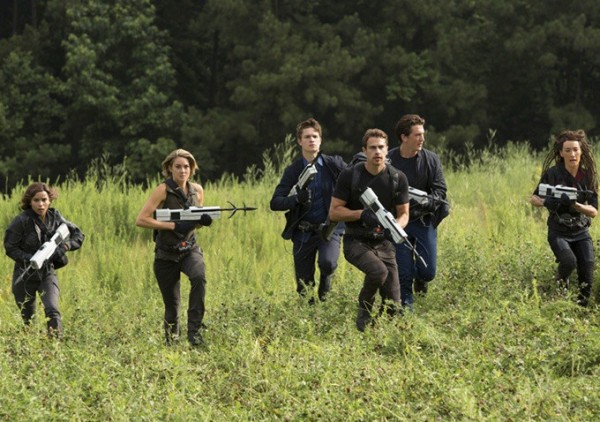
Tris and Four rescue Caleb, and along with Peter (Miles Teller), Christina (Zoe Kravitz), and Tori (Maggie Q) make a break for the gate, escaping to the Fringe, a radioactive wasteland so polluted, the rain is colored red (Raining Blood!)

They find the Founders, named the Bureau of Genetic Welfare. Their leader, David (Jeff Daniels), says Chicago's been monitored for centuries - the local kids ogle Four like a TV star - and finally, the experiment has produced a genetically "Pure" divergent person, a.k.a. Tris. 

So Chicagoans were divided into groups based on arbitrarily chosen moral traits. The hope was the factions would keep order (dubious at best), and they'd cross-breed to produce a perfectly divergent person. How does one empirically measure bravery or honesty to know if someone's a perfect blend? According to Allegiant, it's in the genes. Never mind that David doesn't explain any of this beyond his assertion. With all the pointless action, subplots, and characters, one would think this could be addressed. Guess we really had to find out if Four was going to get along with his new hard-ass commanding officer.

Where Jennifer Lawrence looks bored in The Hunger Games: Mockingjay - Part 2, Shailene Woodley's still energized. It's just a shame she has little to do. Most of her scenes consist of awkward, one-sided conversations with Four or David. There's barely any development outside of her being "the only one" who can fulfill the experiment/goal/prophecy.
Allegiant feels like busy work. We're watching characters run from soldiers, trek through desert, hack surveillance, hunt down rogues - a plethora of plot with little impact. The movie differs from other "Part Ones"in that it's filled with action, but is somehow more dull. It's not a matter of turning Allegiant and Ascendant into one two-hour movie, but boiling the plot to its essentials. With an Alex Garland or David Cronenberg - storytellers who've explored technology's relationship with sociology (Ex Machina and Videodrome, respectively) - at the helm, we'd have a tighter, more focused film.

As it stands, the movie's bogged down by a cluttered script, and Schwentke's direction, while glossy at times, reminds me too much of last year's Maze Runner: The Scorch Trials or Transformers (the cinematography, especially) to feel fresh.

This film's two hours, and it's a slog to sit through. This, and Hollywood's continued resistance to tell a trilogy in three movies leaves me unwilling to stick around for Ascendant. Consider this my jump-off point. If you're only a fan of the movies, just pick up the last book.

It'll be less expensive and less disappointing.

Thank you all for reading. I'm the Man Without a Plan, signing off.


Saturday, March 19, 2016

"Hardcore Henry" ADVANCE Review

We tout this word like candy, but Hardcore Henry is a game-changer, emphasis on "game."

Since 1993, the best video game movie is still Mortal Kombat. Doom and The House of the Dead fail to reach a 25 percent on Rotten Tomatoes, combined. Bioshock struggles to get green-lit, and the less we mention Super Mario Bros, the better.

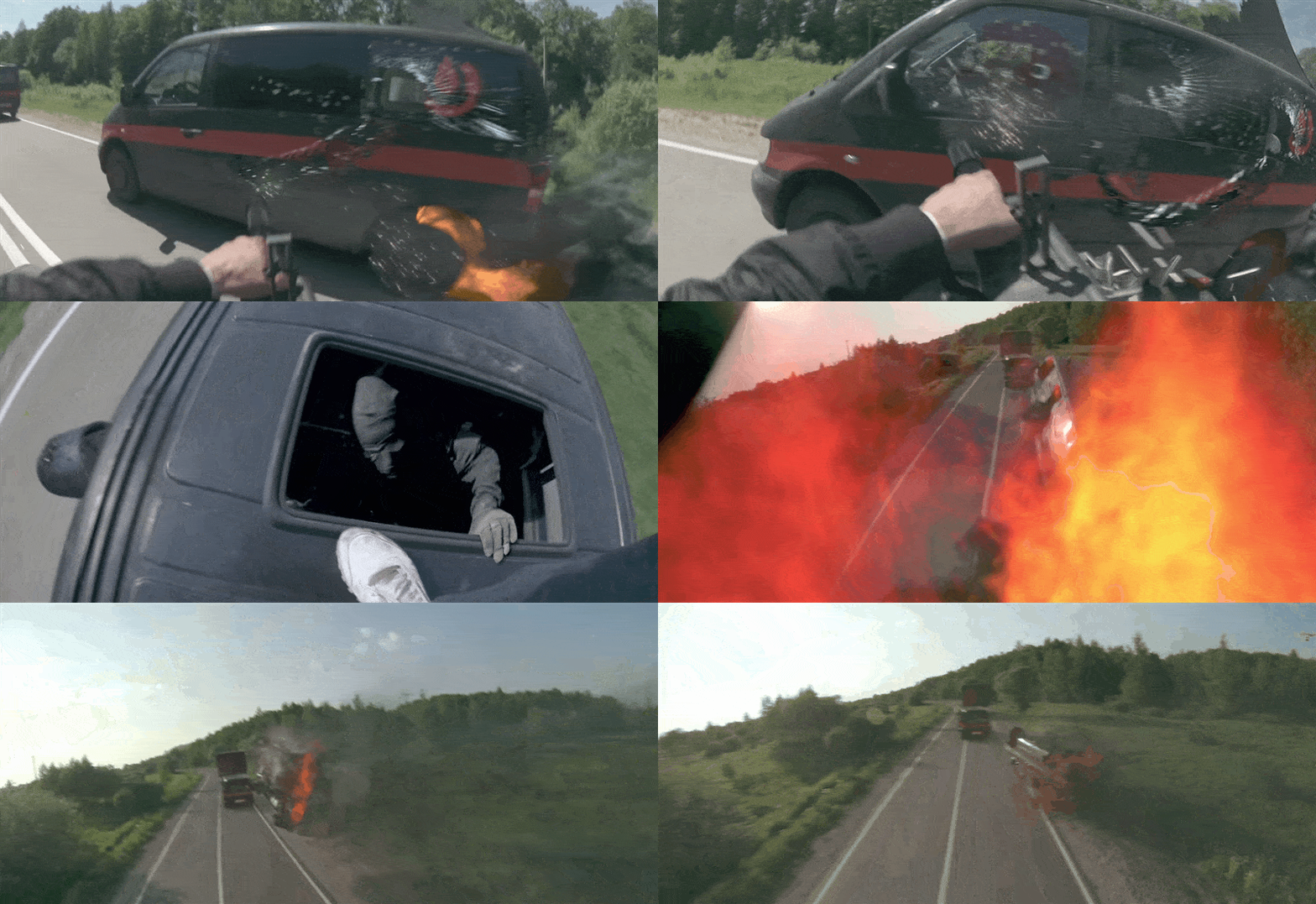
Hardcore Henry, while not based on a game, takes what's great about gaming - its immersion and momentum - and adapts it to film. The result is a gleeful orchestra of cars, shotguns, grenades, knives, and relentless, pulse-pounding action.

Henry is a man-turned-cyborg whose scientist wife is kidnapped by a telekinetic madman (Danila Koslovsky behaving like a cross of Dante from Devil May Cry and Vaas from Far Cry 3). Helping Henry is tech wizard and master of disguise Jimmy (Sharlto Copley), who somehow has the uncanny ability to survive any explosion or flamethrower to the face. (Don't ask. It's funnier if you don't.)

Henry's body is occupied by a team of stuntmen, but for the purpose of this review, let's say Henry (Daniel Berrios) <--- is me. The movie's shot entirely in first-person, so when Henry ducks, I duck. He shoots, I shoot. If he jumps up ledges, Assassin's Creed style, I swallow my fear of heights and do it.

Immersion is the name of the game here, even to the point where Henry is a mute protagonist (his voice modulator's broken). The movie doesn't cheat; we're only privy to the information Henry is. The only "cheats" are in the editing, and if you enjoyed finding the cuts in Birdman, you'll have similar fun. This plays out like one of the virtual reality "roller coasters" at Chuck E. Cheese and I promise you, that's a compliment.


Before I continue, a disclaimer: those with epilepsy, sensitive eyesight, or migraines beware. With first-person view comes an abundance of shaky-cam and if that doesn't give you a headache, the flashes of gunfire and quick editing will.

If your reasons for avoiding shaky-cam aren't medical, fret not. It isn't a blight on the movie; after the first 30 minutes, my eyes adjusted surprisingly well. The action's clear among the tremors, never confusion as to what's going on.

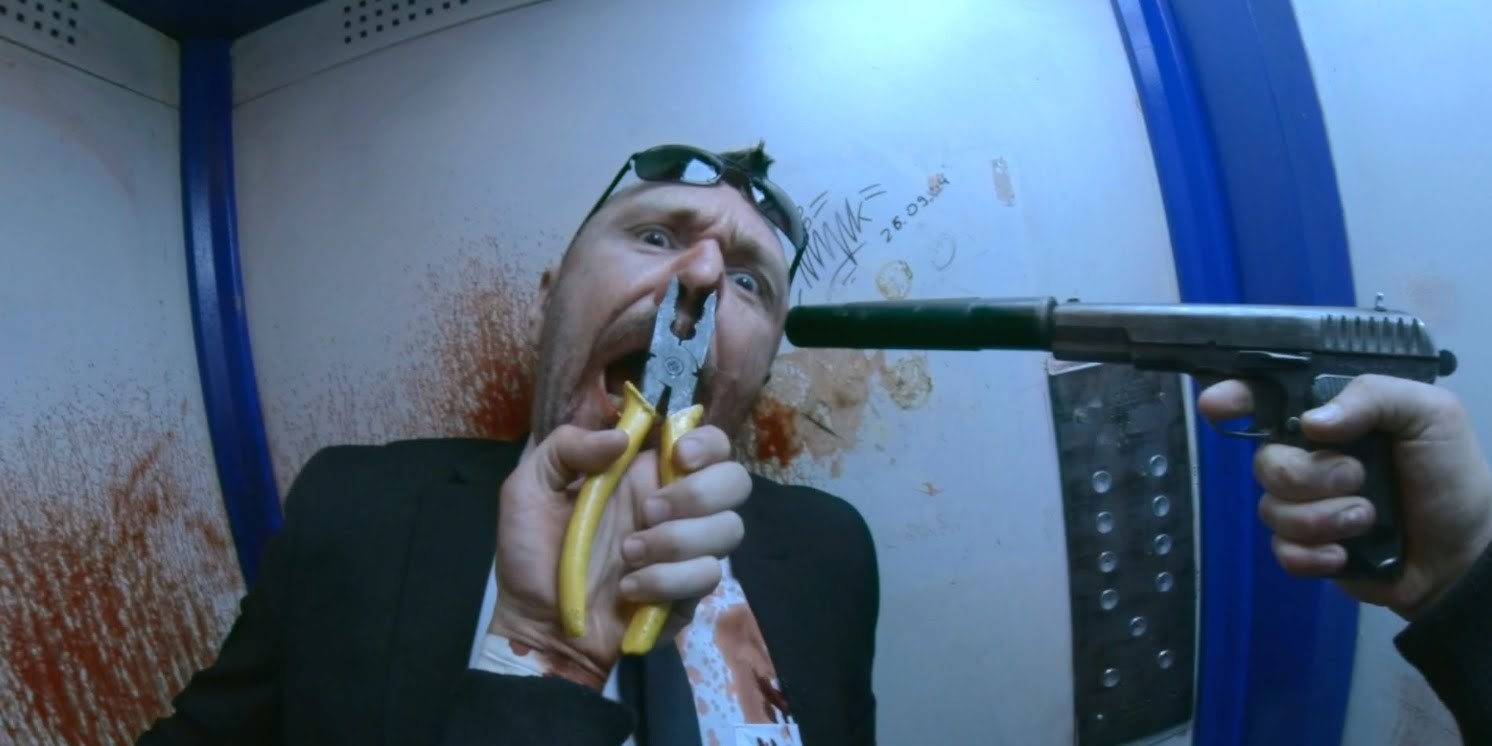
Hardcore Henry is visceral, loose, and spontaneous - everything I wanted Deadpool to be. No off-screen headshots here: the blood splatters everywhere (often with chunks of brain), even onto the screen. Through Henry's eyes, we slice, shoot, crash, tear, and blow holes into everything, in ways that'll make Mortal Kombat fanatics drop their jaws.

While the movie isn’t about videogames, director Ilya Naishuller was inspired by first-person shooters, integrating some of that style in the film. The nods are everywhere, from Call of Duty and Gears of War, to Max Payne and Bioshock Infinite. A henchman will close a gate, and Henry, instead of opening it, will wall-jump over. Guns and ammo are littered about like cigarette butts. Henry jams two syringes of adrenaline in his thighs and goes berserk, like Mario touching a star.

Sharlto Copley is a comic tour-de-force. This is my favorite role of his, eclipsing District 9. Think if Jim Varney from Ernest Goes to Camp starred in Ichi the Killer. At times, Copley’s Jimmy is a mohawk-wearing punk, bouncing off the walls; a prim and proper WWII-era British officer; a coked-out party animal; and a guerrilla soldier camouflaged as a shrub (who happens to skulk around exclusively gray environments). Each disguise is funnier than the last, and Copley’s manic energy brings it to life.

All in all, it's a blast. My grin reached from ear to ear for most of the movie, and for a good hour after. If you're a gamer, if you're a fan of ballistic insanity, if you're a fan of ridiculous comedy, this hits all the right notes. This is the kind of movie that we should say "pushes the boundaries," because it pushes the genre forward. Hardcore Henry comes out on April 8th.

Thank you all for reading; I'm the Man Without a Plan, signing off.